DESTINATION
WEDDING JAPANBY 37 FRAMES
Begin your story
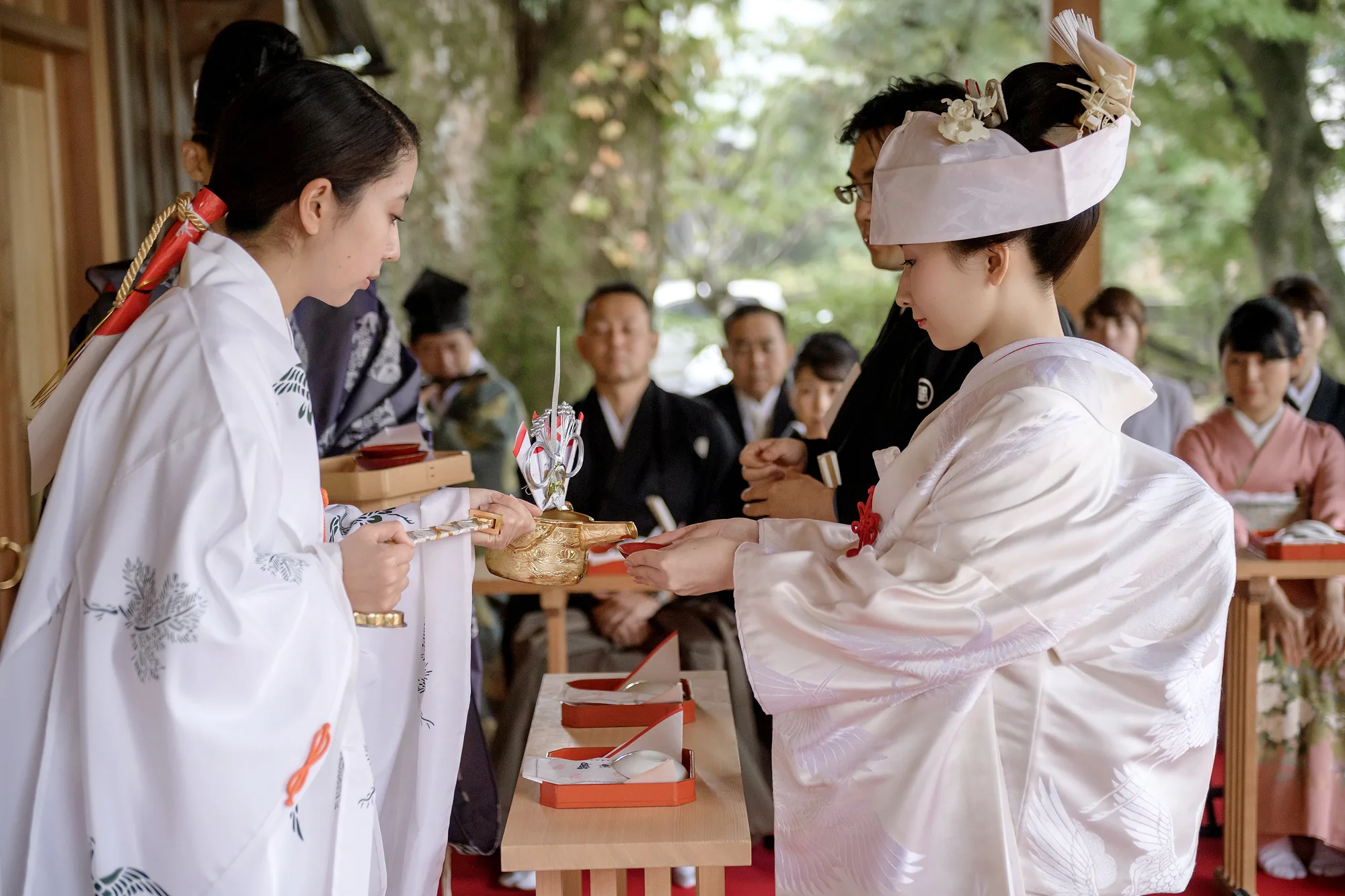
A shrine maiden pours sake for the bride in shiromuku and tsunokakushi during san-san-kudo at a Shinto wedding in Japan, family watching behind.

TRADITIONAL WEDDING CEREMONIES IN JAPAN

A ceremony you can enter with understanding.

Perhaps a Japanese ceremony is part of your family story. Perhaps it grows from years of returning here, or from a tradition you’d like to understand more deeply. We’d love to know what draws you to it.

A Shinto wedding, like any religious ceremony, has its own form and meaning. We help you understand what taking part involves, working with the people responsible for the ceremony and considering how it belongs within your wedding. You should have room to ask questions before deciding that it’s right for you.
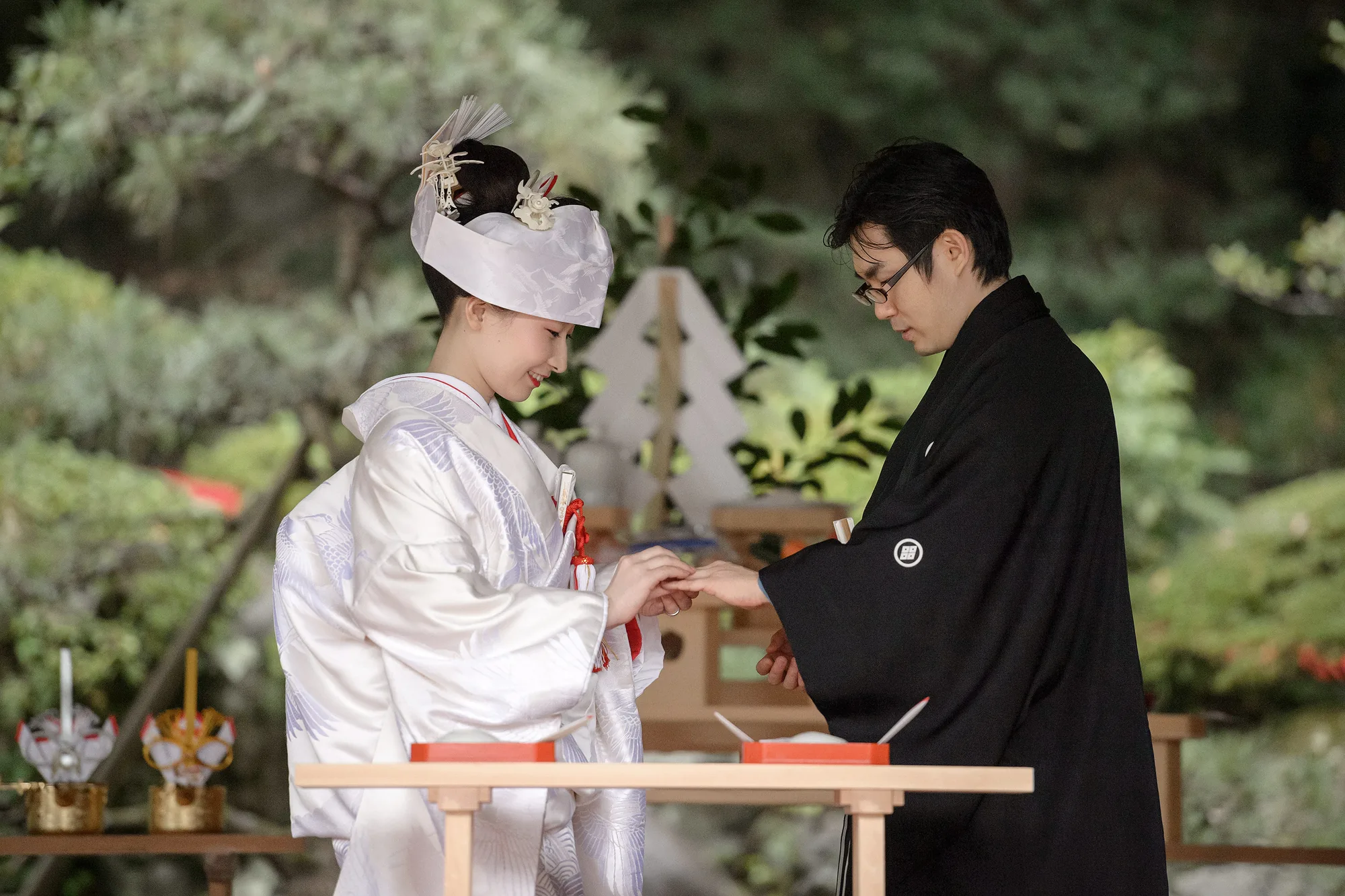
The groom in black montsuki places the ring on the bride's finger before the altar at a Shinto shrine wedding in a Japanese garden.

Taking part, together

For a shrine wedding, we speak with the shrine team about the ceremony, language, attire and the roles of everyone attending. We work through those details for your celebration, rather than assuming one shrine does things in the same way as another.

That preparation helps you and your guests feel part of the occasion. You’ll understand what you’re about to share, where everyone needs to be and whether there is a role for them in the ceremony.

Bring us the questions you haven’t found an answer to. We’ll discuss them with the people who can explain the ceremony you’re considering.
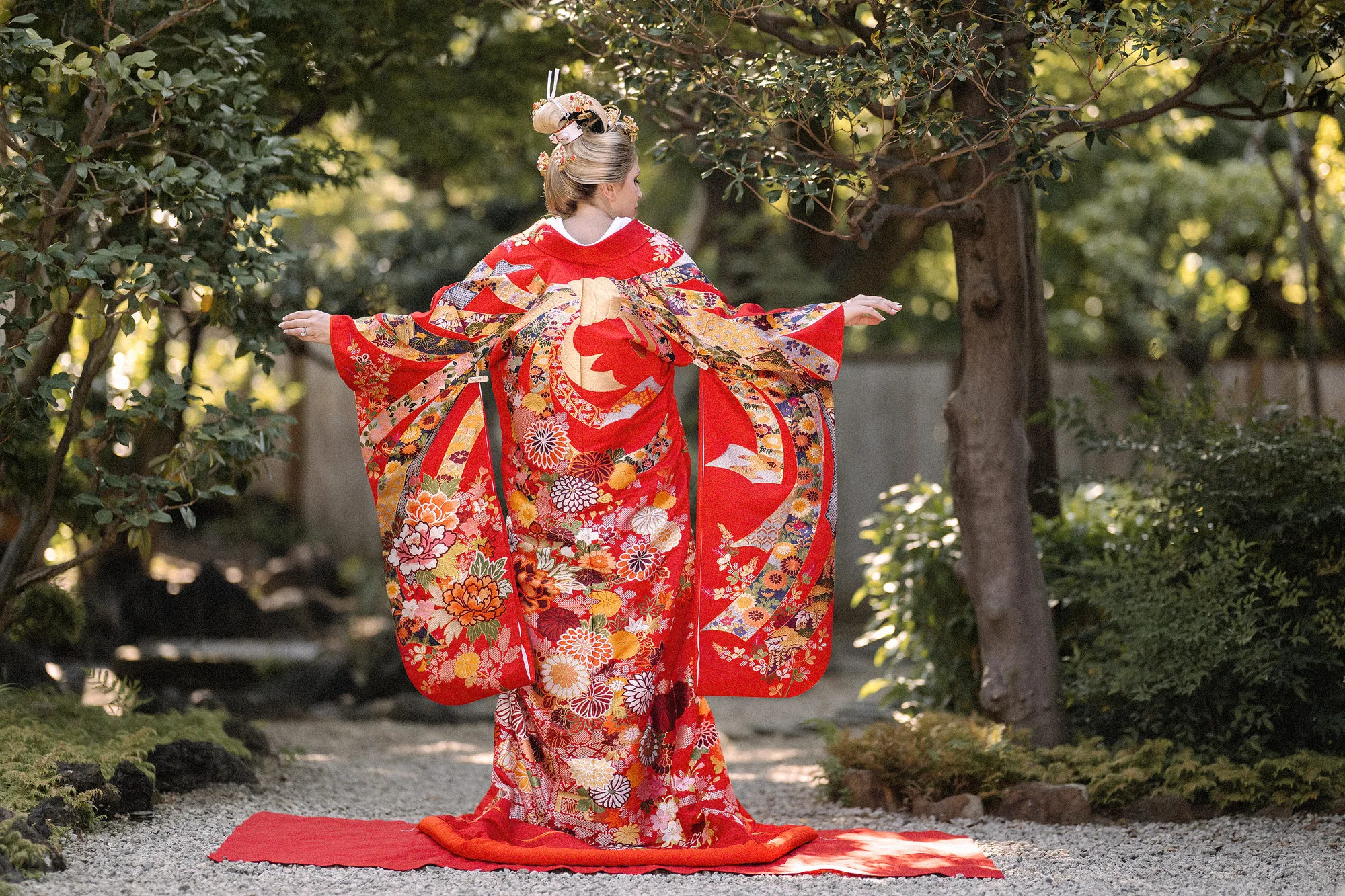
Bride in a red iro-uchikake wedding kimono and nihongami, arms open to show the back of the robe, on a gravel path in a Tokyo garden
Tokyo

The wedding begins while you’re getting ready

When kimono is part of the day, dressing involves specialist skill and attention. We give it time within the plans, arranging the appropriate support and considering how preparation connects with the ceremony and photography.

There is pleasure in experiencing that care, rather than seeing it only as something to finish before the wedding begins. The people helping you prepare contribute to the way you remember the day, too.
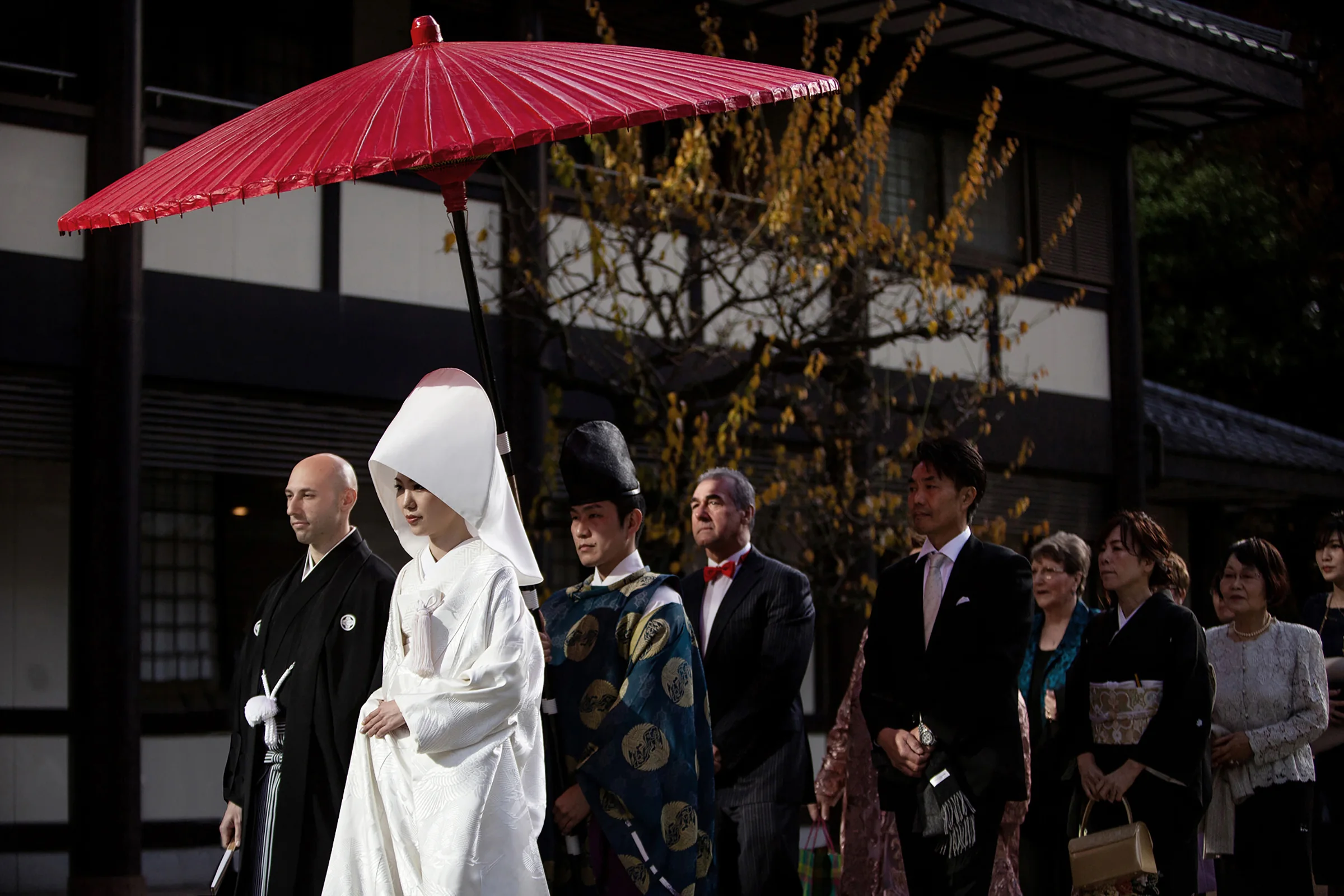
A shrine wedding procession under a red parasol, the bride in a white wataboshi.

Your own traditions have a place in the conversation

You may be bringing customs from more than one family, or want a personal exchange of vows alongside a traditional ceremony. We discuss what belongs within the institution’s form and what can have its own place elsewhere in the celebration.

The celebration can change pace afterwards. A formal ceremony might lead into dinner with a close group or an evening of music and dancing. We plan the setting, hospitality and flow so these different parts still feel like the same two people.
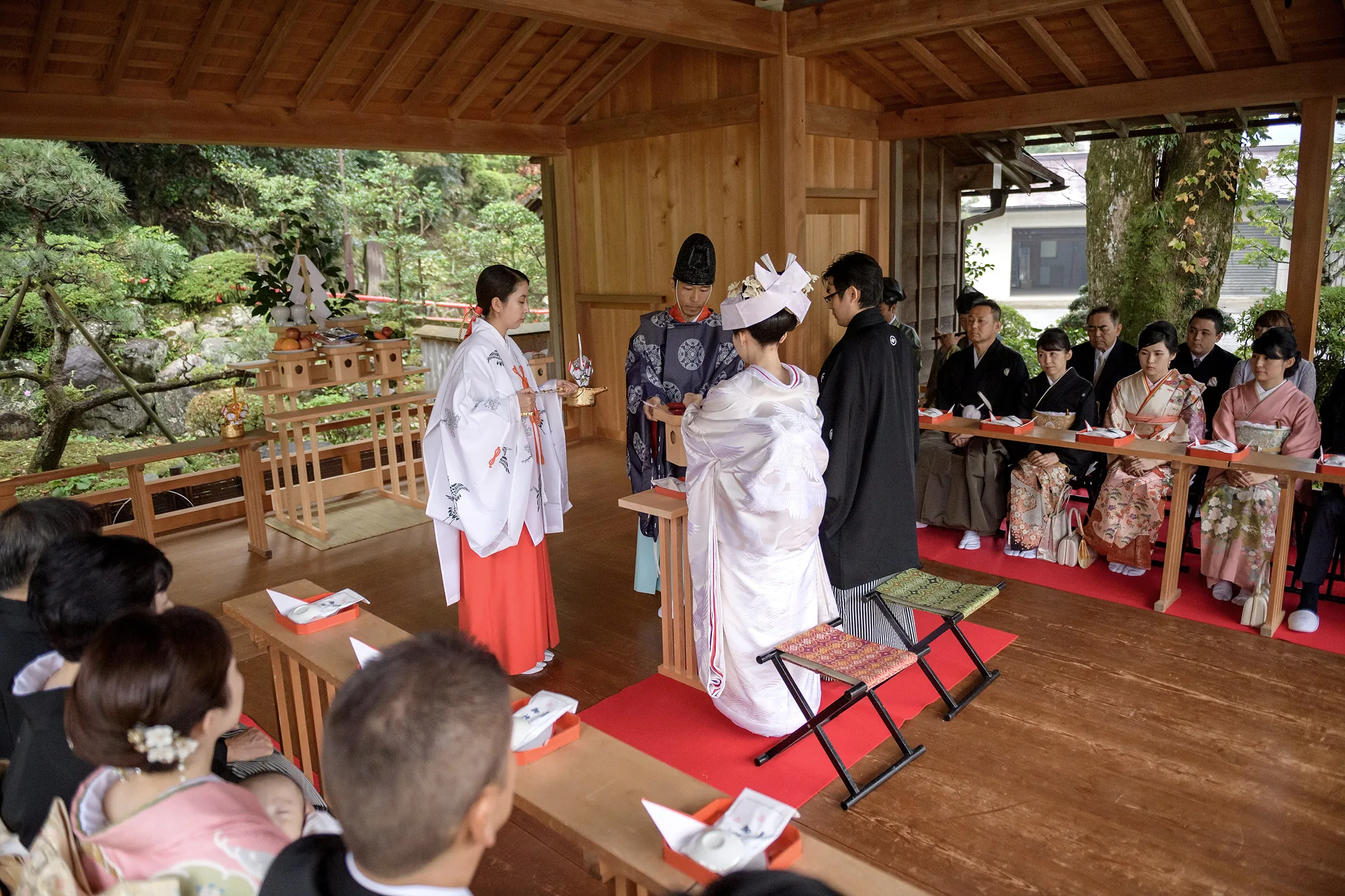
A shrine maiden in red hakama stands by as the bride in tsunokakushi and the groom take their places at a Shinto wedding in a garden pavilion, family seated in kimono.

Photography begins with knowing the ceremony

Our planning and Creative Team confirm photography access, camera positions and equipment arrangements in advance. Knowing the ceremony helps us anticipate what matters while respecting its form and the people conducting it.

We also make time for portraits and the celebration around it, bringing your own visual references into the photographs while keeping a sense of the place.
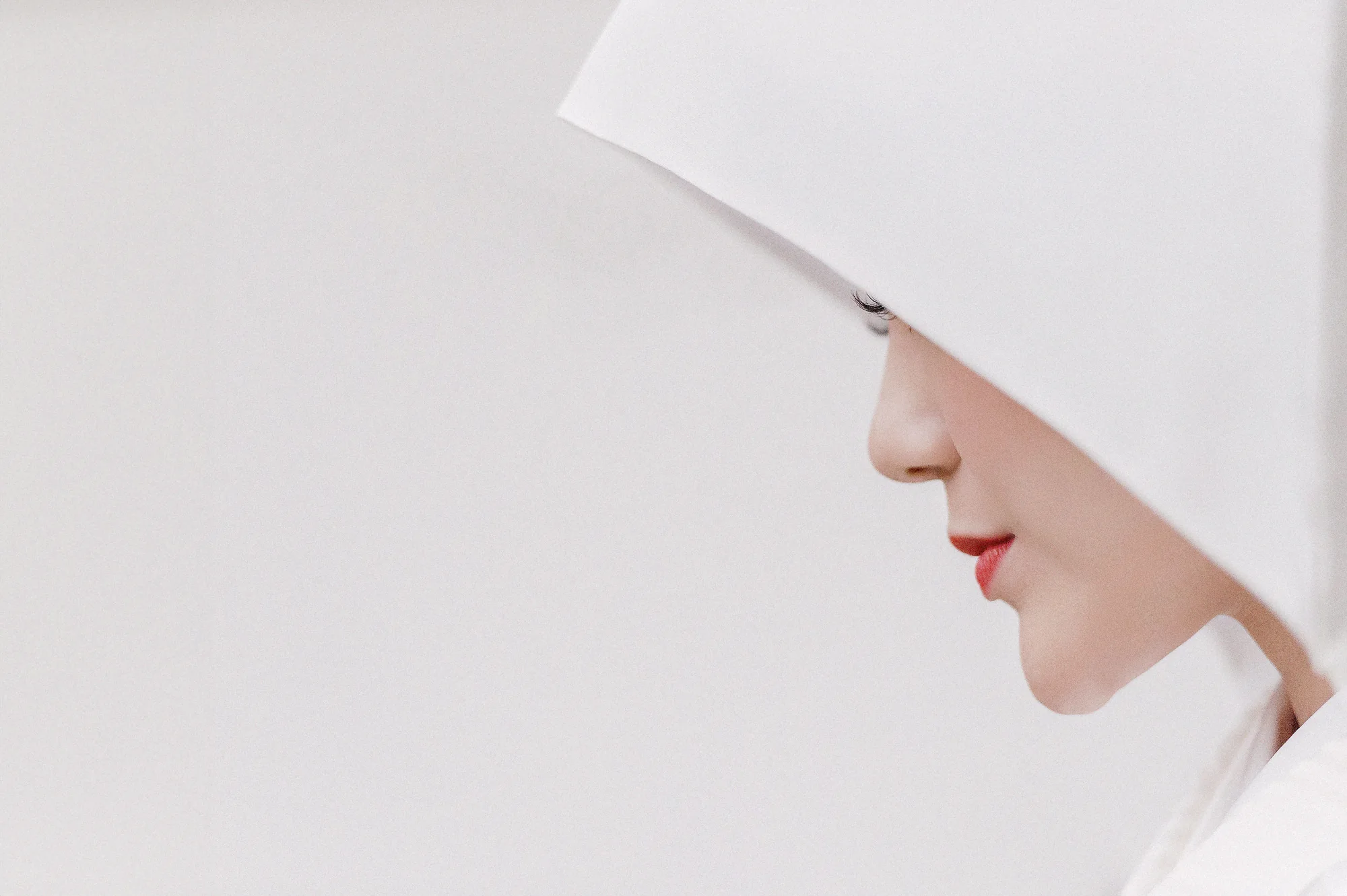
A bride in a white wataboshi hood in profile, her red lips the only color.
Tokyo
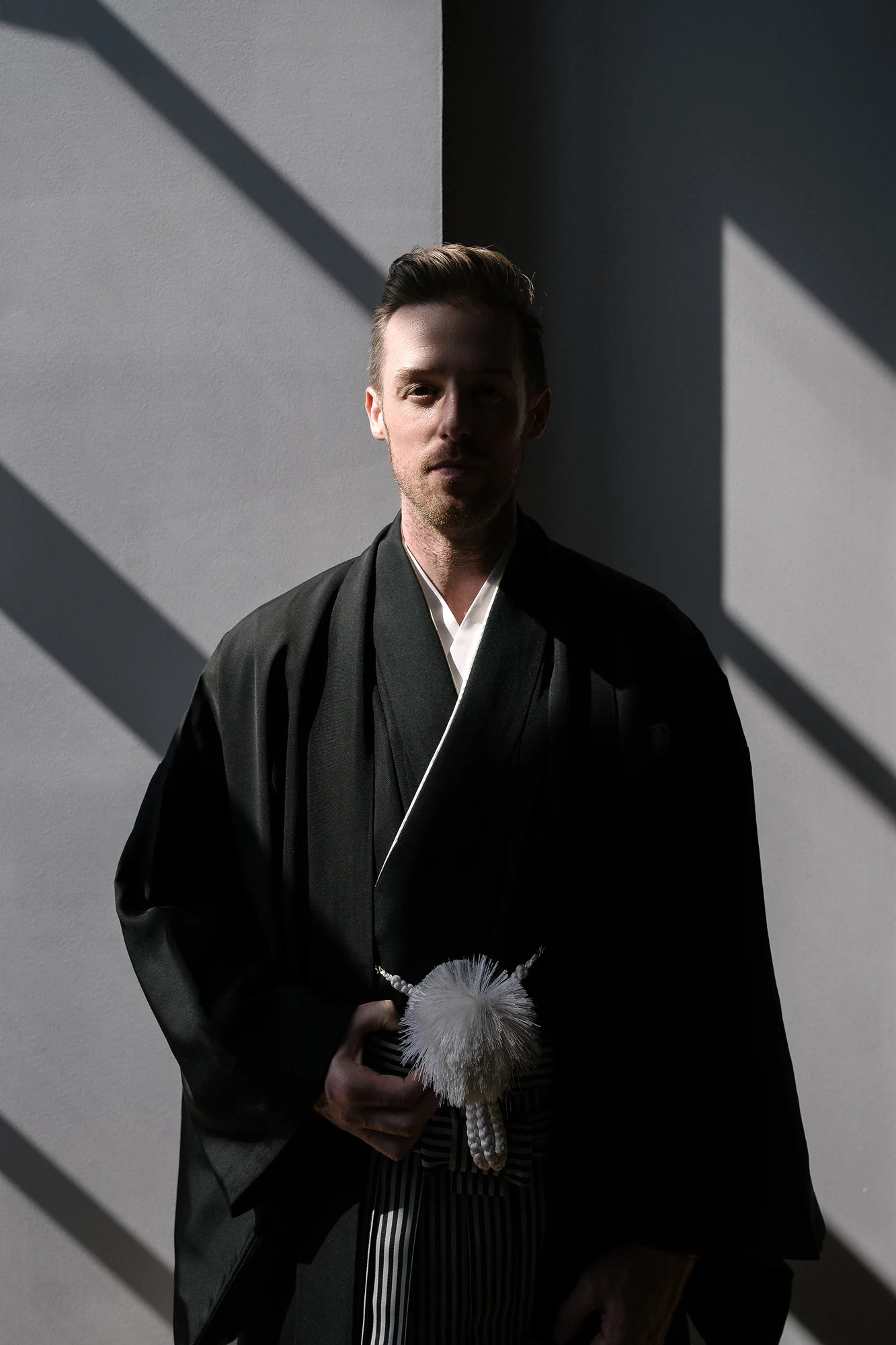
The groom in a black montsuki and striped hakama stands half in shadow against a pale wall crossed by bars of light.
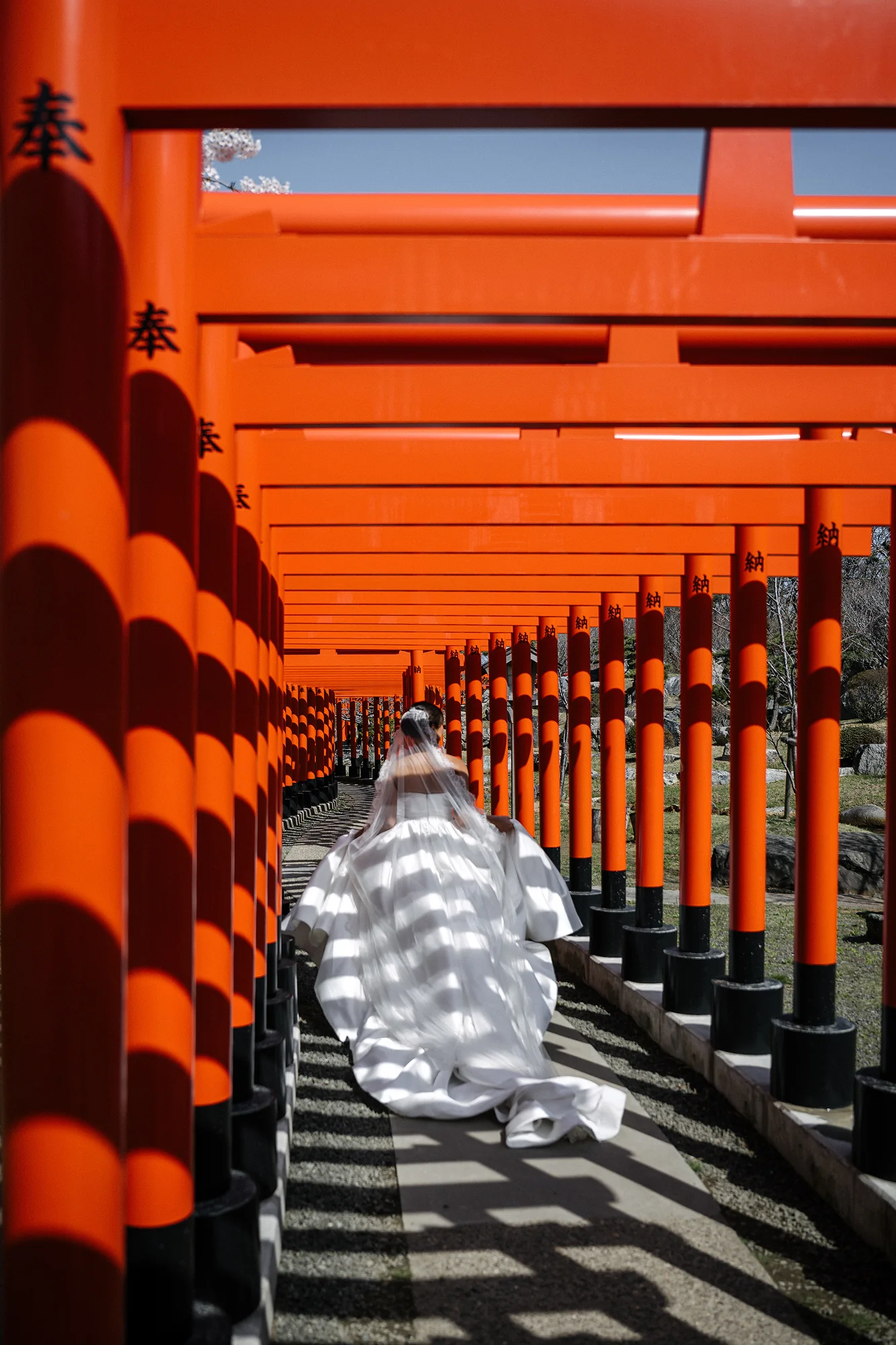
Seen from behind, the bride in her gown and veil walks through a long tunnel of vermilion torii striped with shadow at Takayama Inari Shrine in Aomori.
Takayama Inari, Aomori
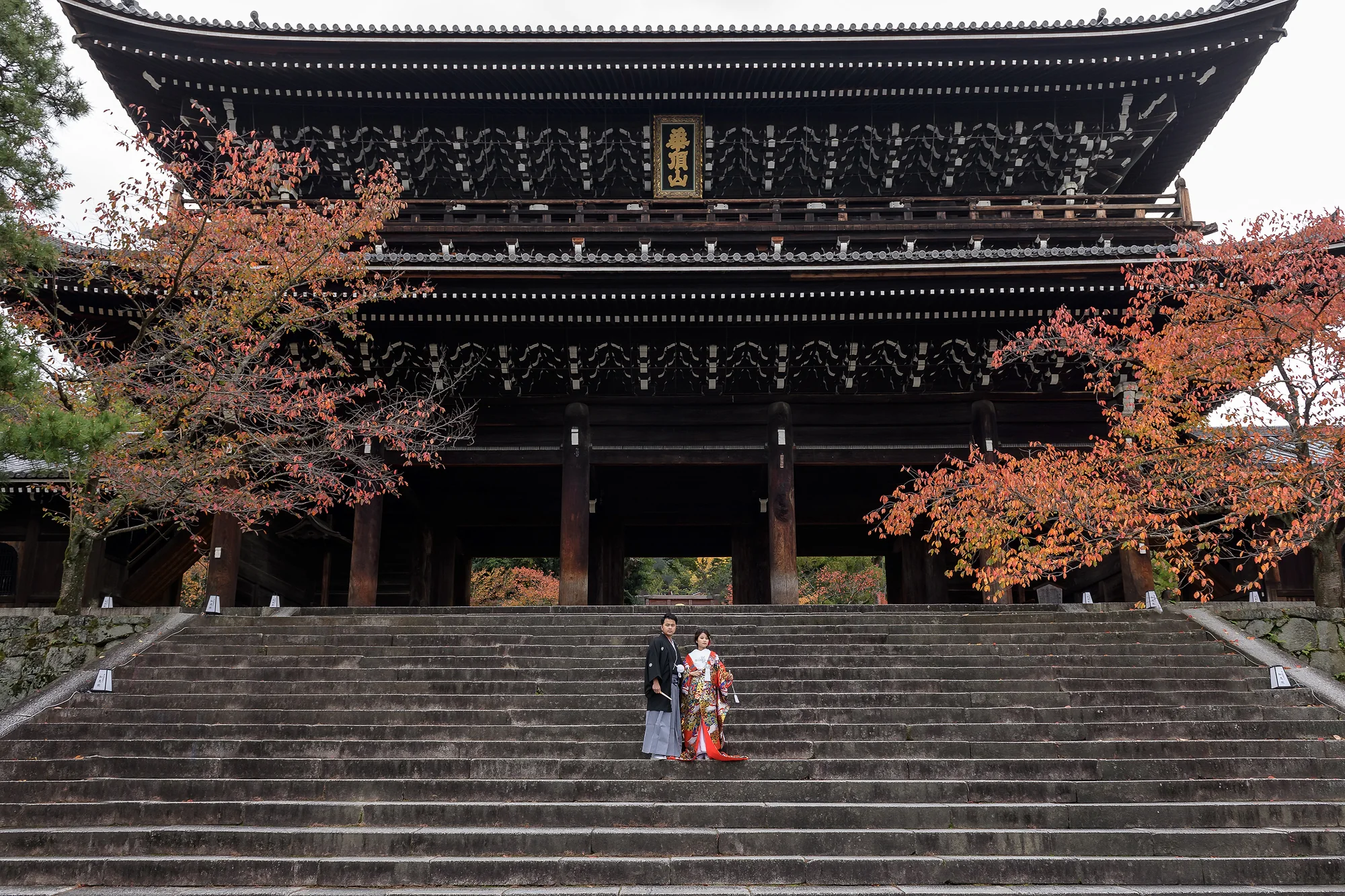
The couple in kimono stand on the wide stone steps below a great temple gate framed by autumn trees in Kyoto.
Kyoto
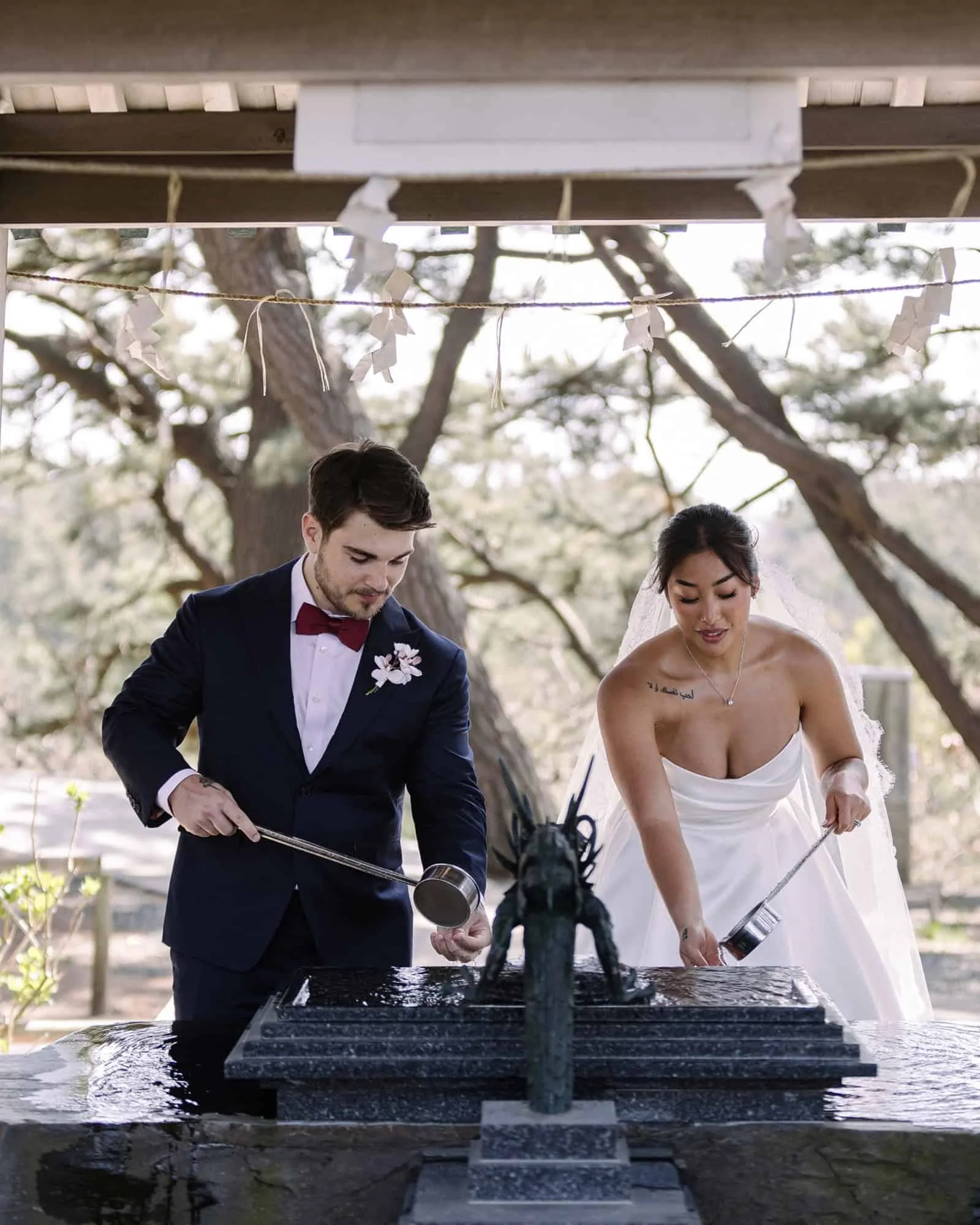
At the water basin, the groom and the bride in her gown and veil purify their hands before their blessing at Takayama Inari Shrine in Aomori.
Takayama Inari, Aomori
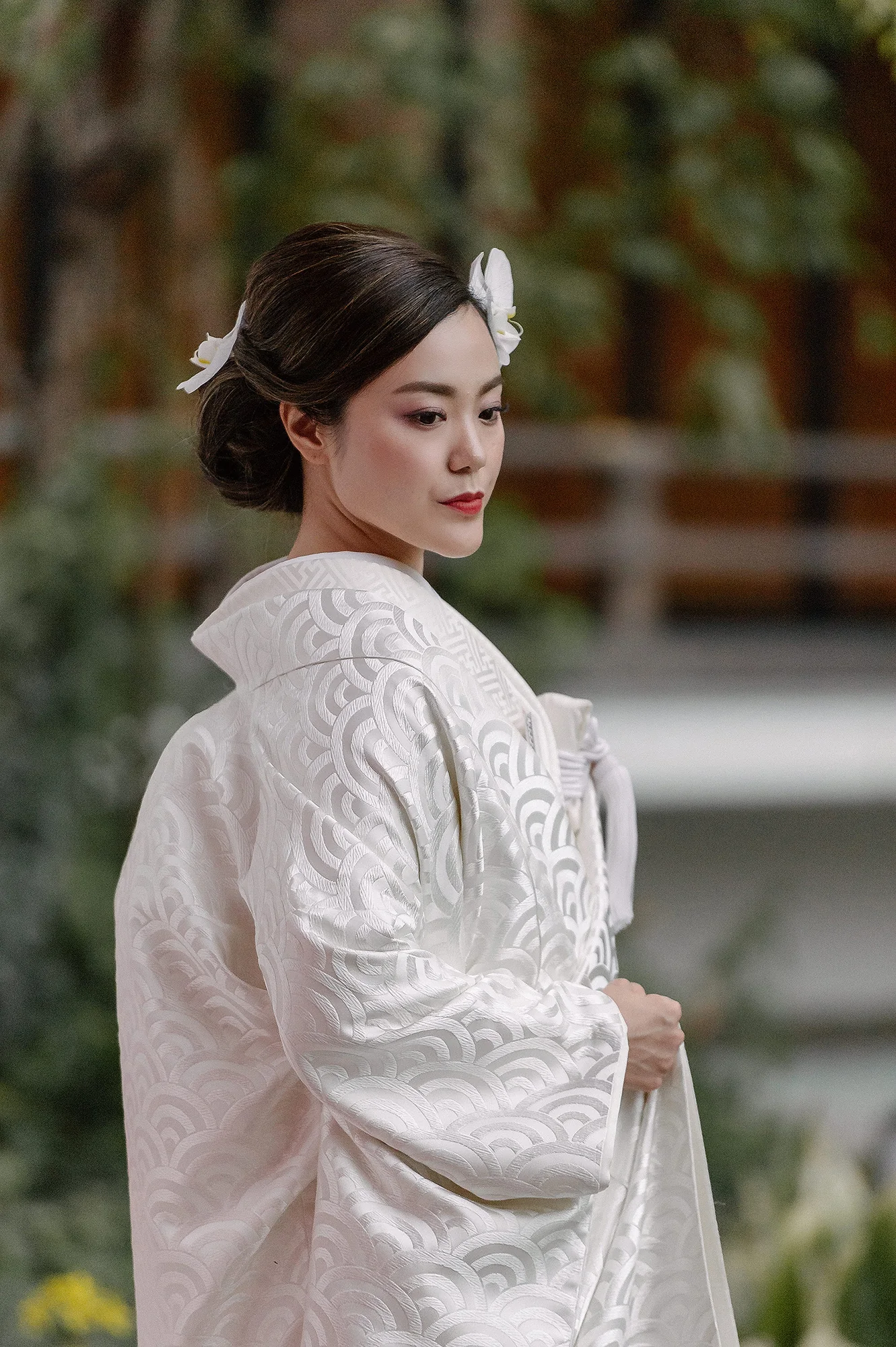
The bride in a white kimono woven with a wave pattern, orchids in her hair, in a garden.
Tokyo
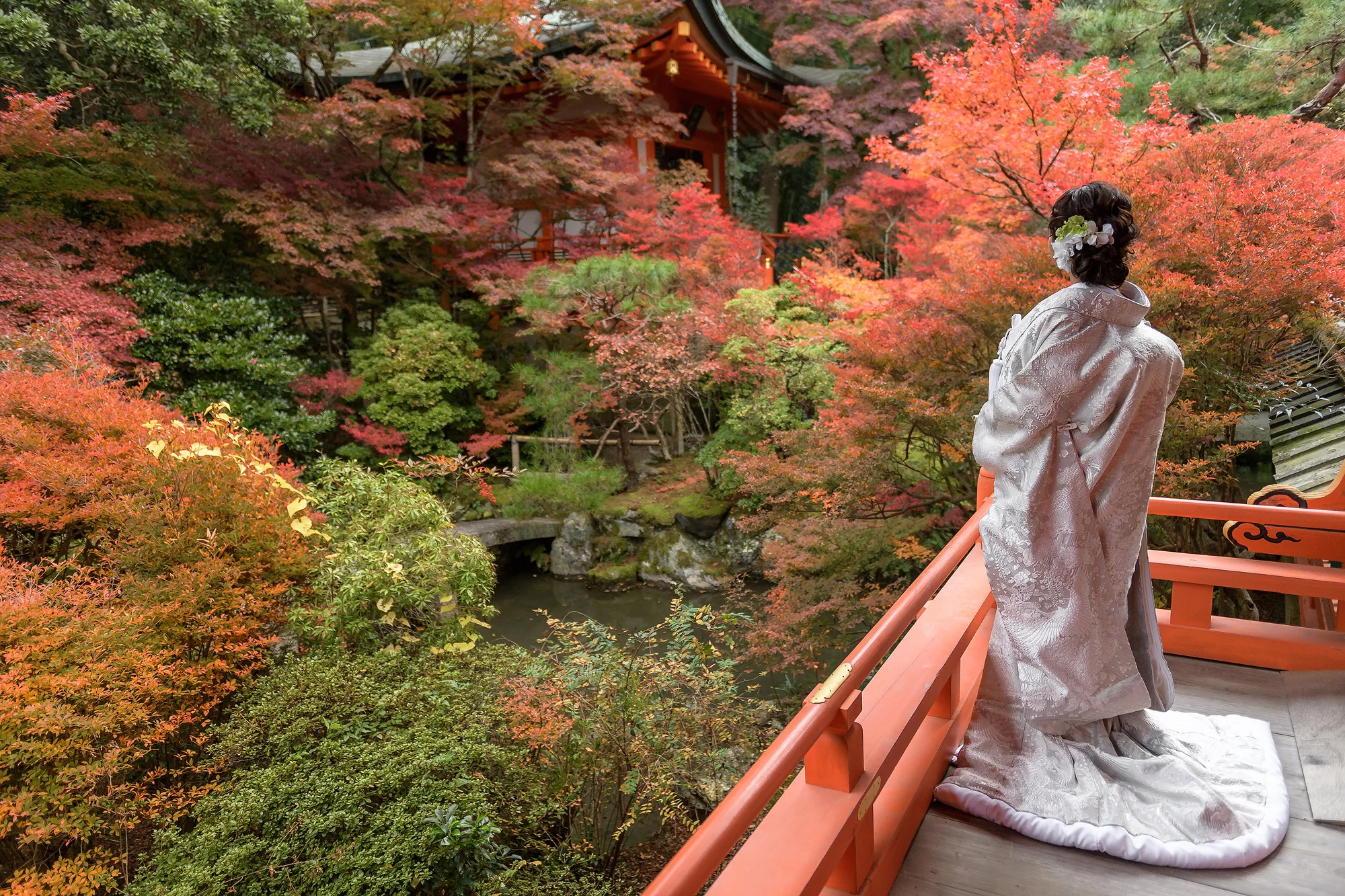
The bride in shiromuku stands on a vermilion balcony looking over an autumn garden in Kyoto.
Kyoto
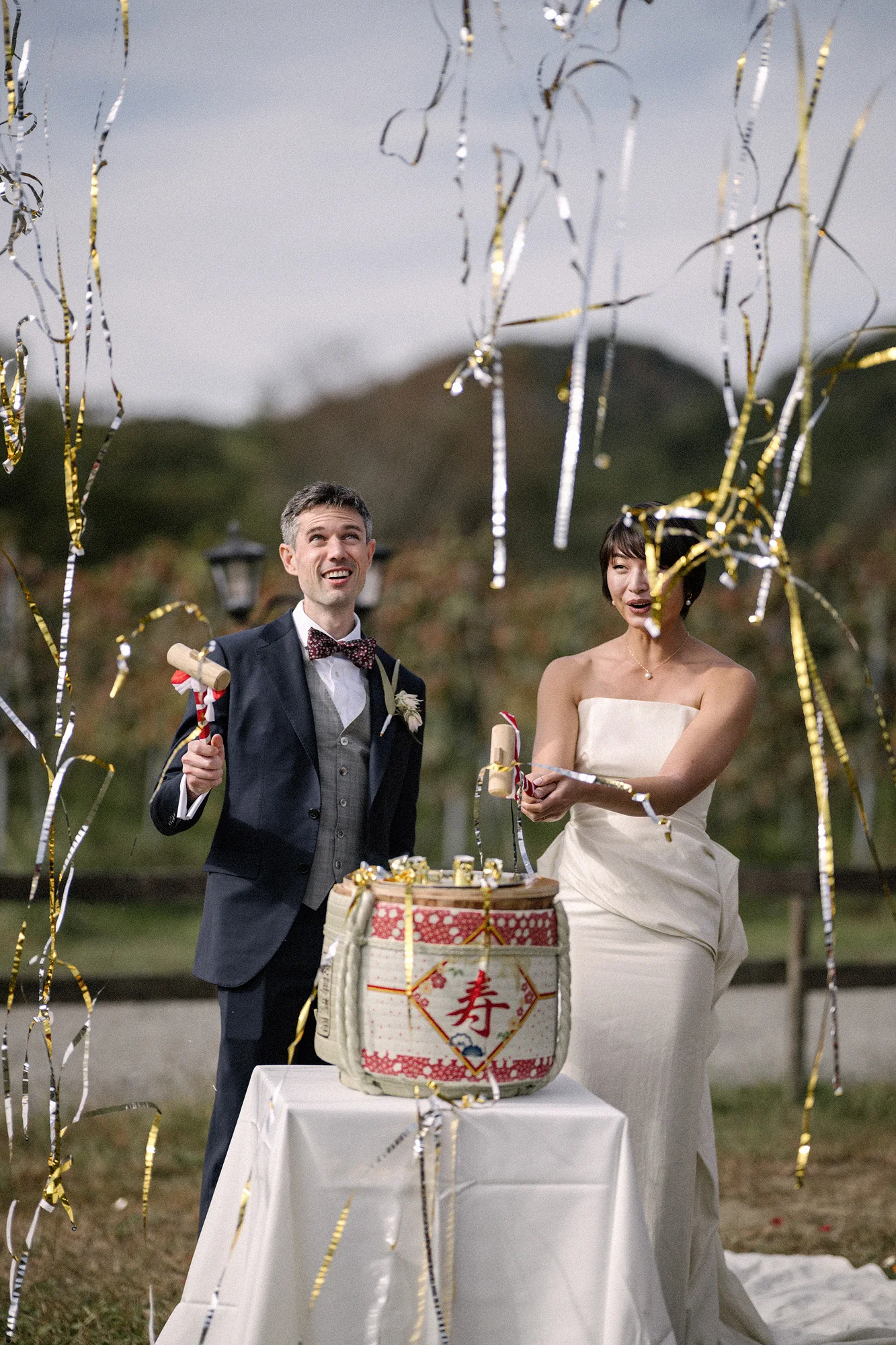
The couple break open a sake barrel in the kagami-biraki ceremony.
Miyagi
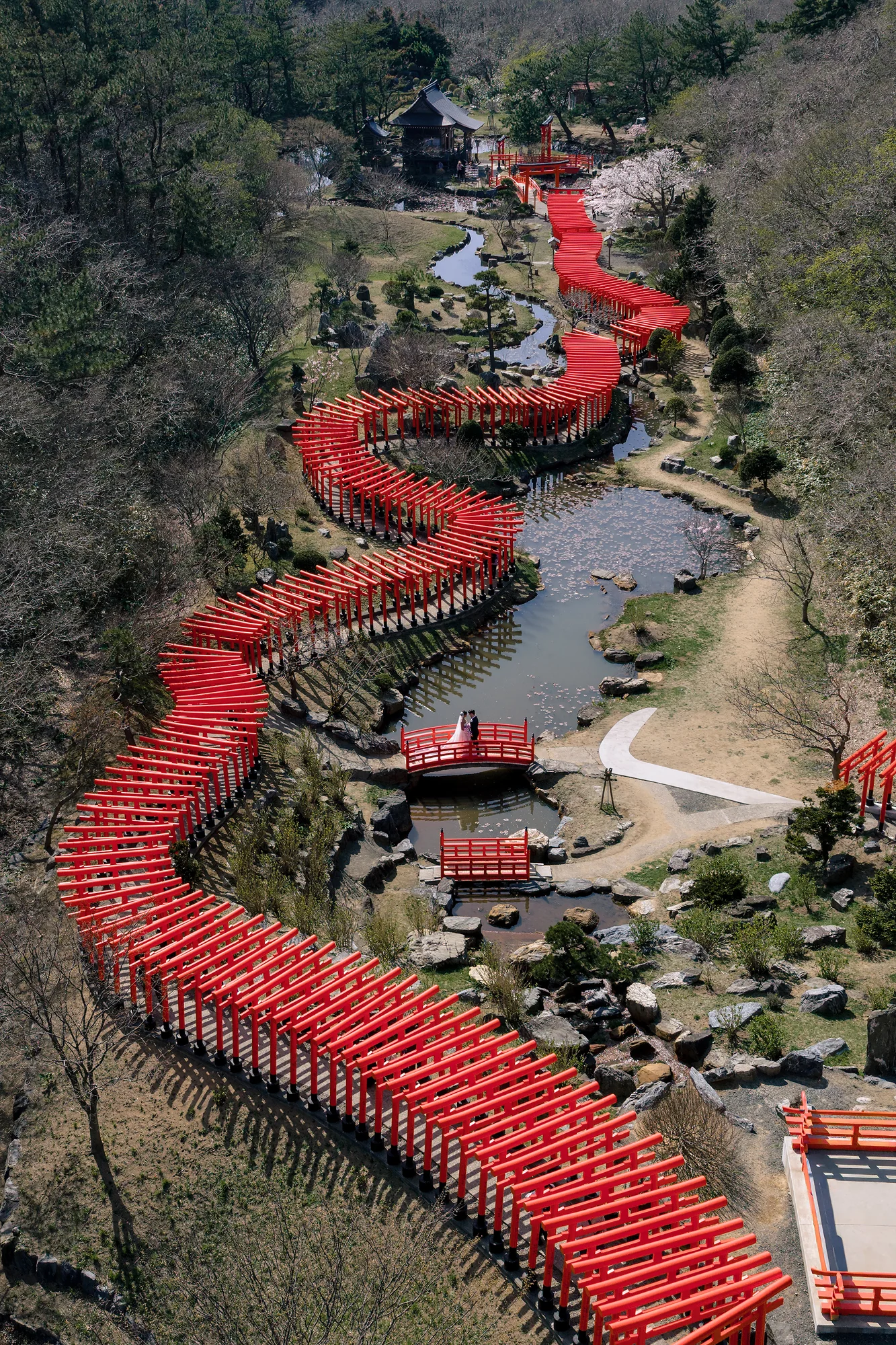
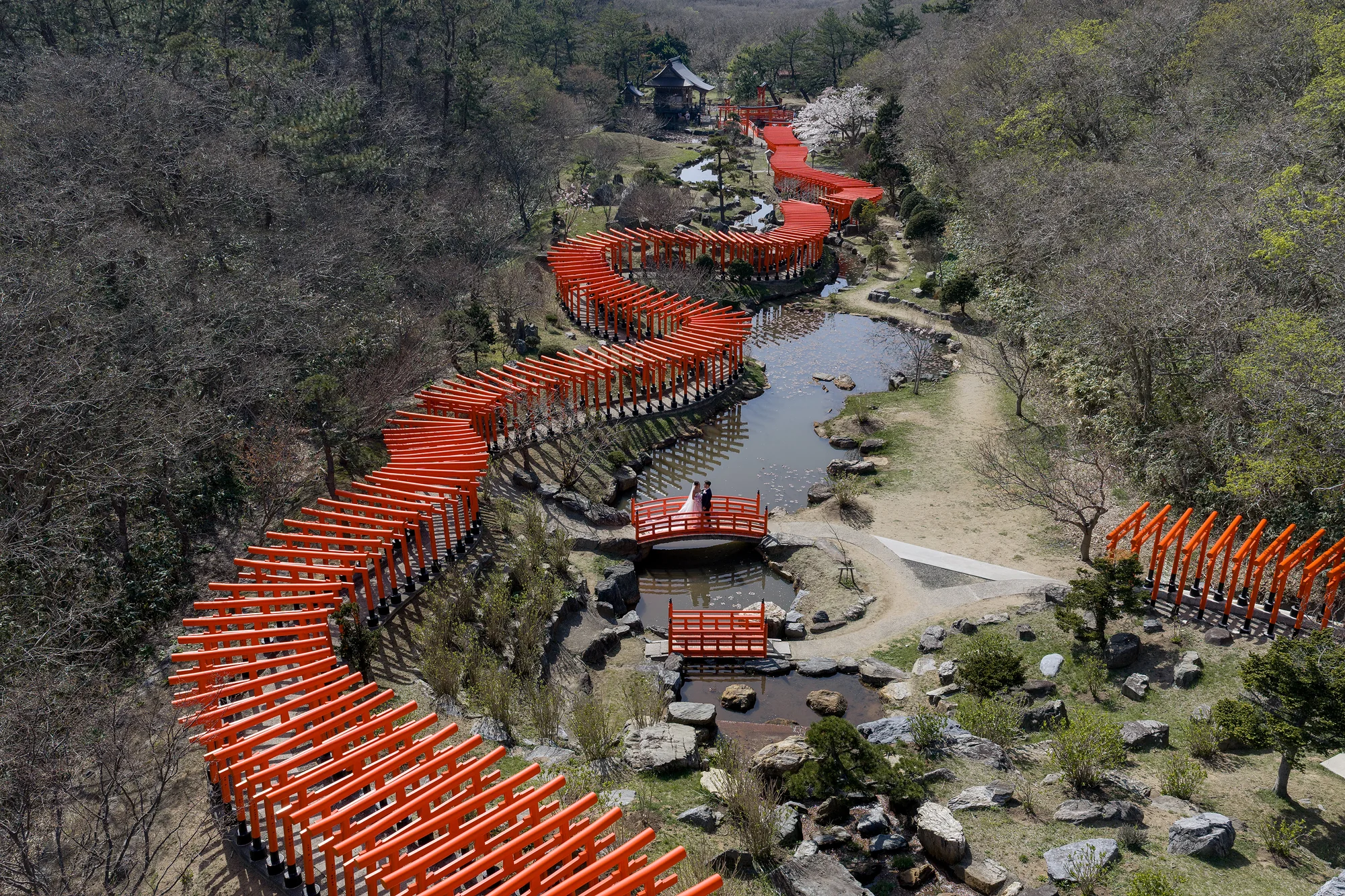
From above, the couple stand on a small red bridge as rows of vermilion torii wind through the garden at Takayama Inari Shrine in Aomori.
Takayama Inari, Aomori
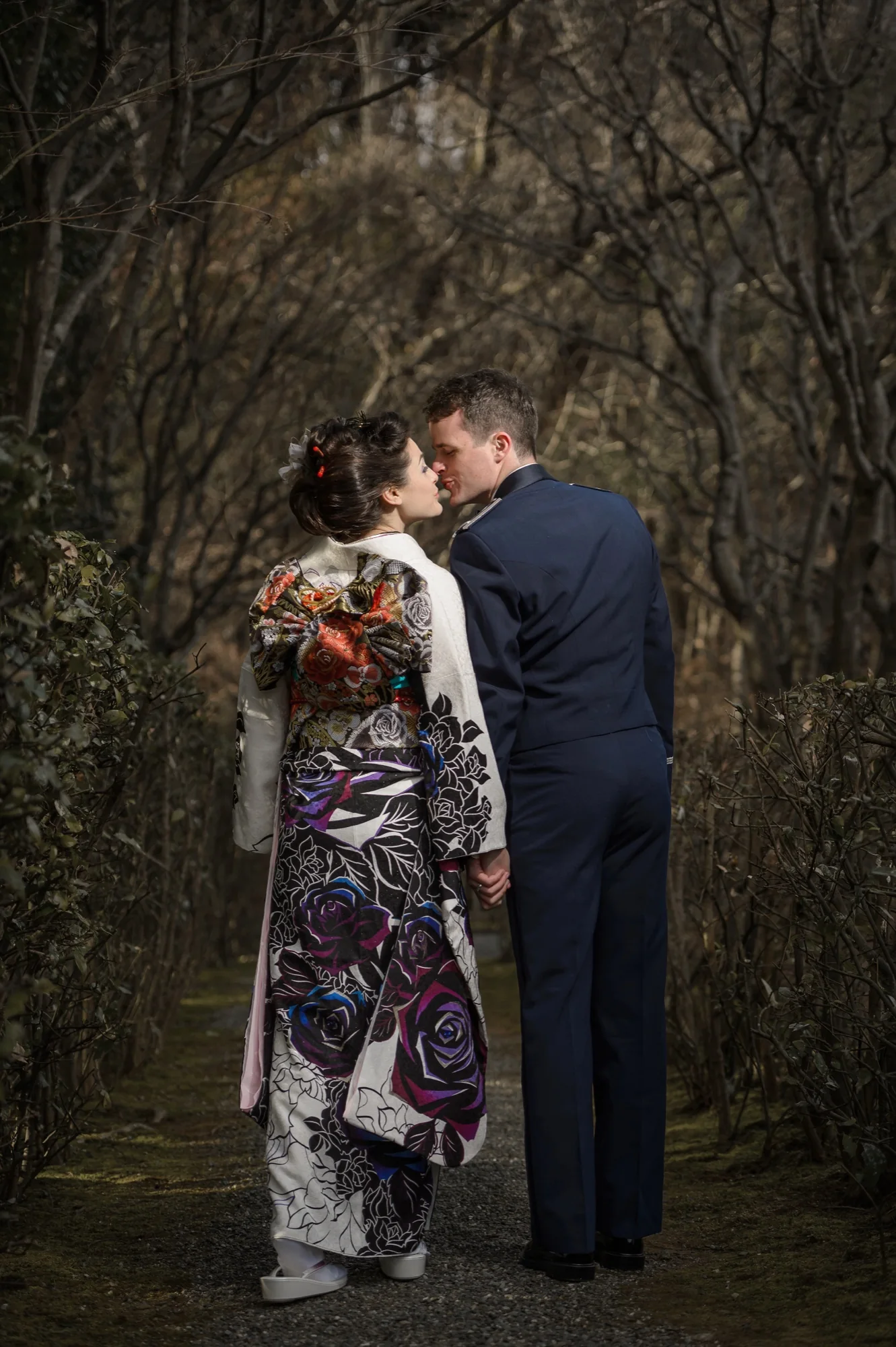
Seen from behind on a garden path, the bride in a rose-patterned furisode and the groom in uniform share a kiss.
Kyoto
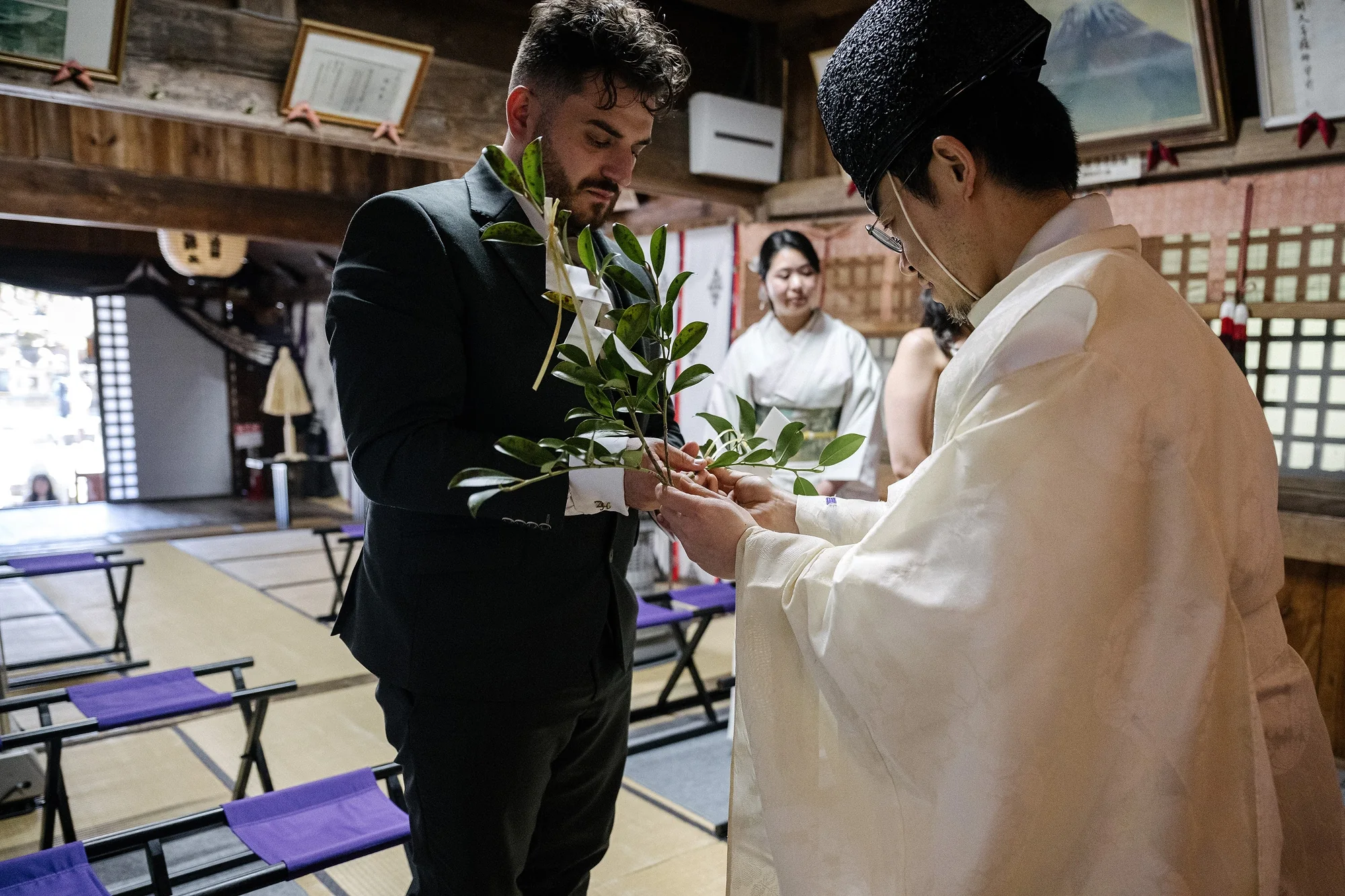
A priest hands the groom a tamagushi branch as the bride looks on during their blessing at a Sengen shrine near Mt Fuji.
Mt Fuji
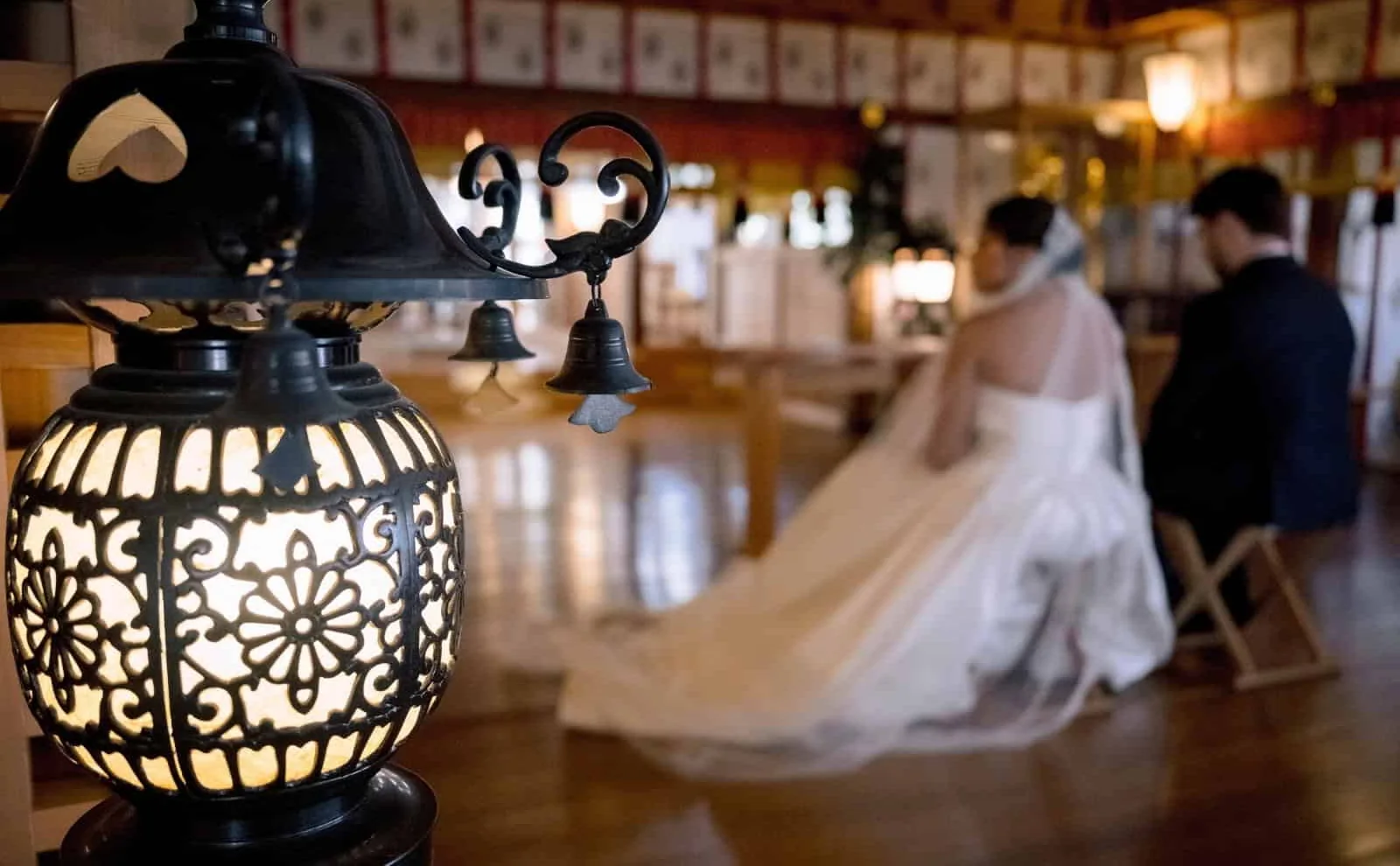
The bride in her gown and the groom sit in the hall at Takayama Inari Shrine during their blessing, a lantern glowing in the foreground.
Takayama Inari, Aomori
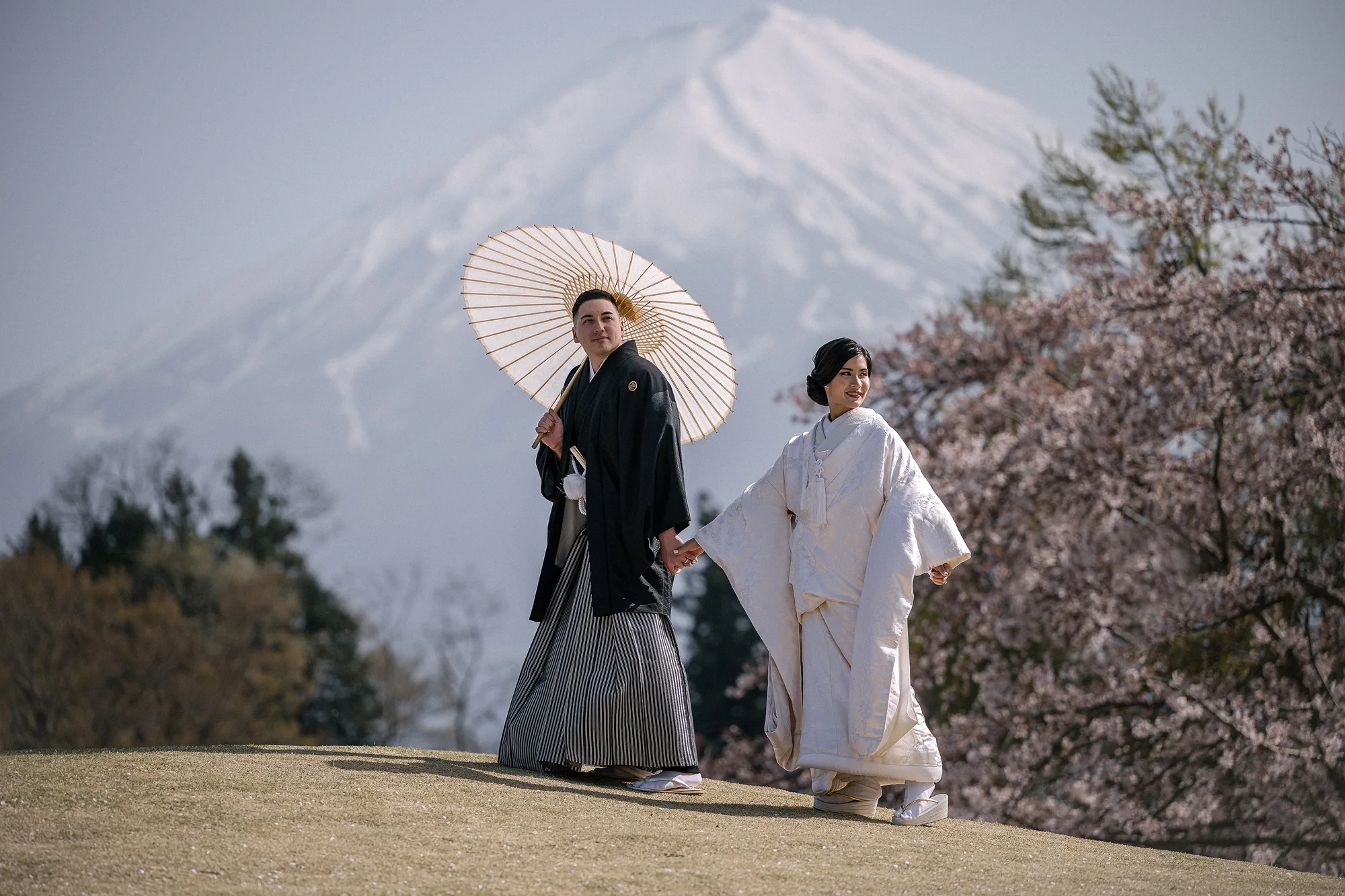
A bride in shiromuku and a groom in montsuki under a paper umbrella, cherry blossom and Mt Fuji behind.
Mt Fuji
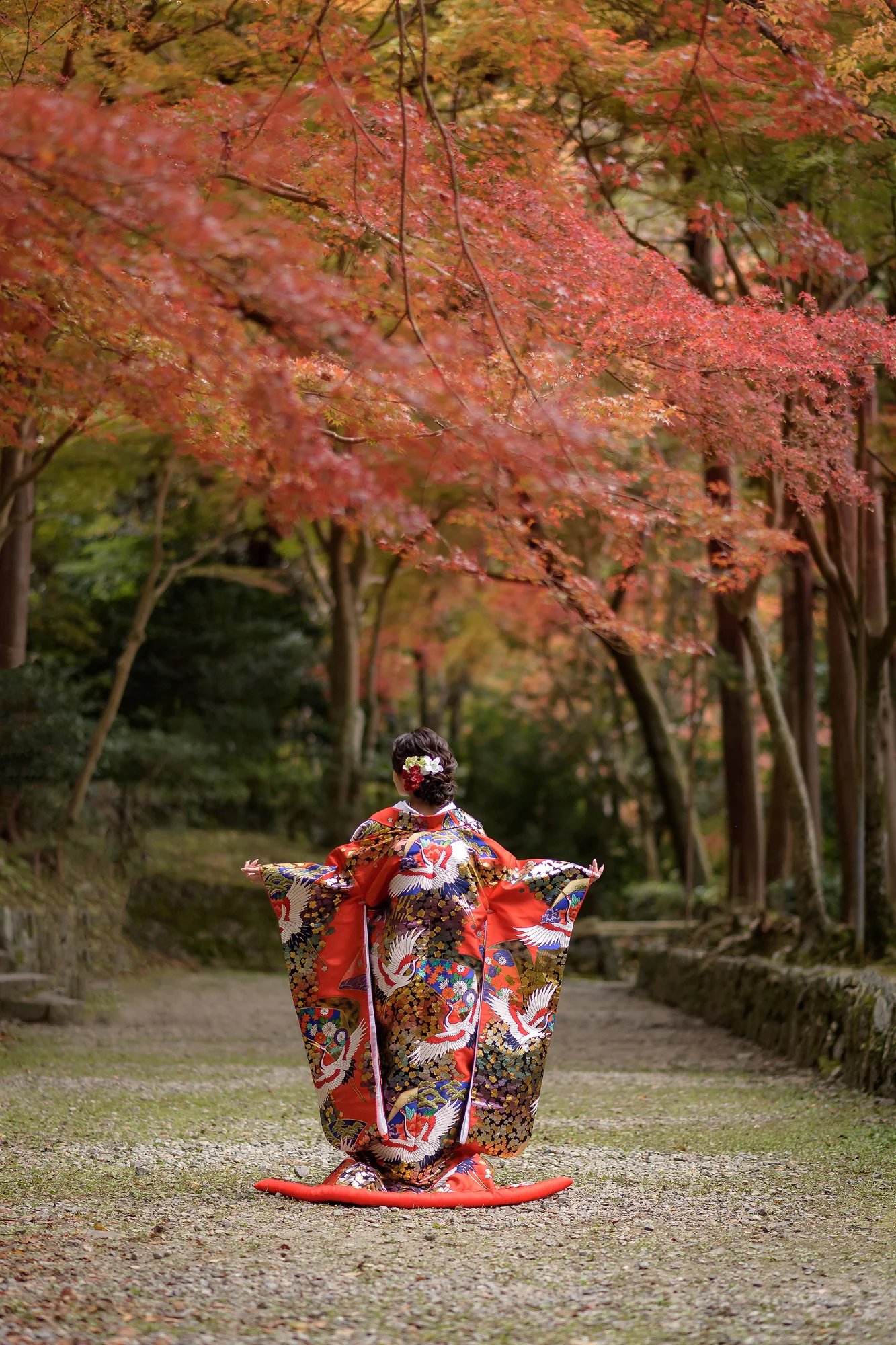
The bride opens her arms in a red iro-uchikake embroidered with cranes beneath red maples on a temple path in Kyoto.
Kyoto
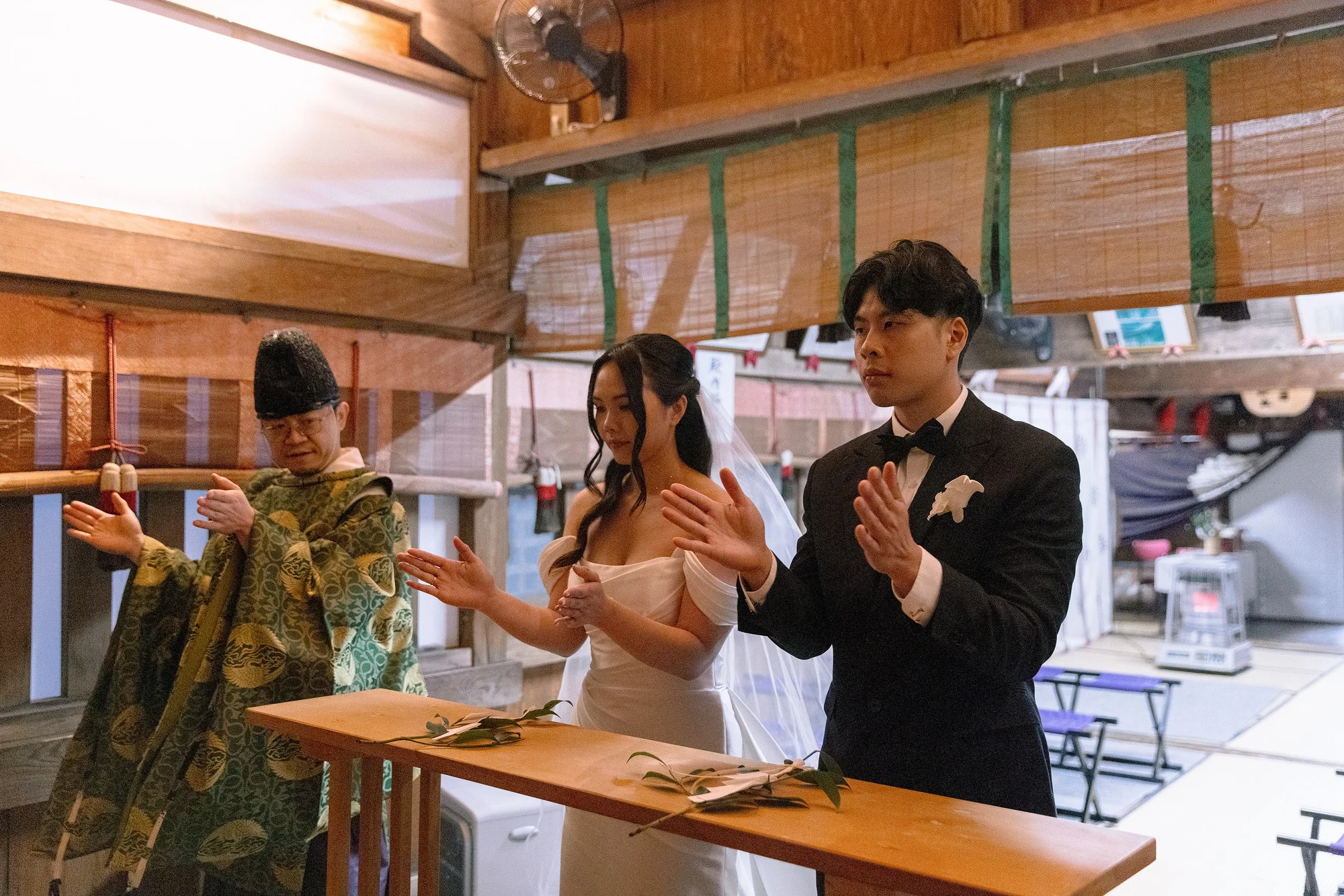
The bride in her gown and the groom clap with the priest at their Shinto blessing at Fuji Omuro Sengen Jinja.
Fuji Omuro Sengen Jinja
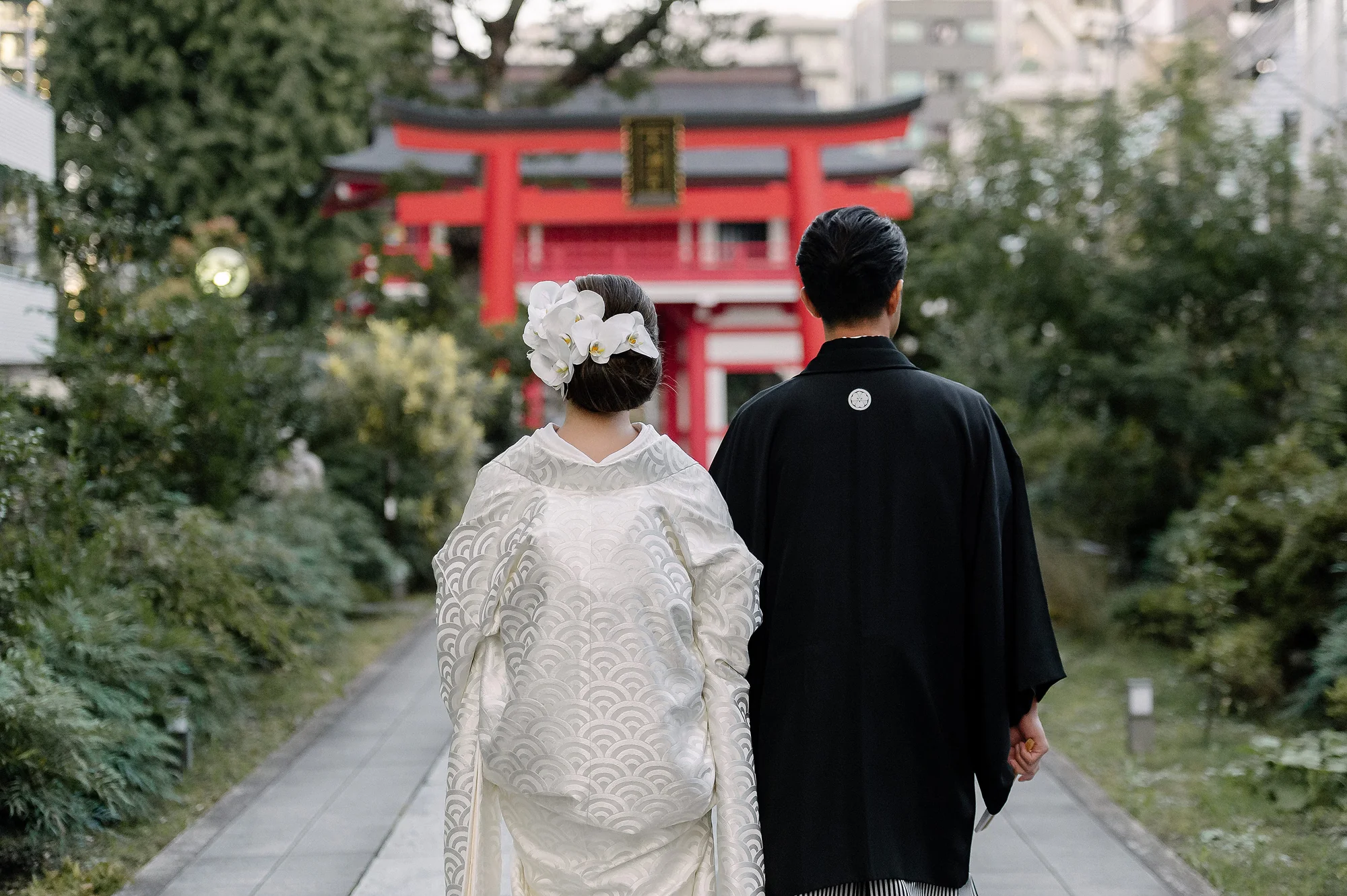
A couple in kimono walk toward a red torii gate.
Shinjuku
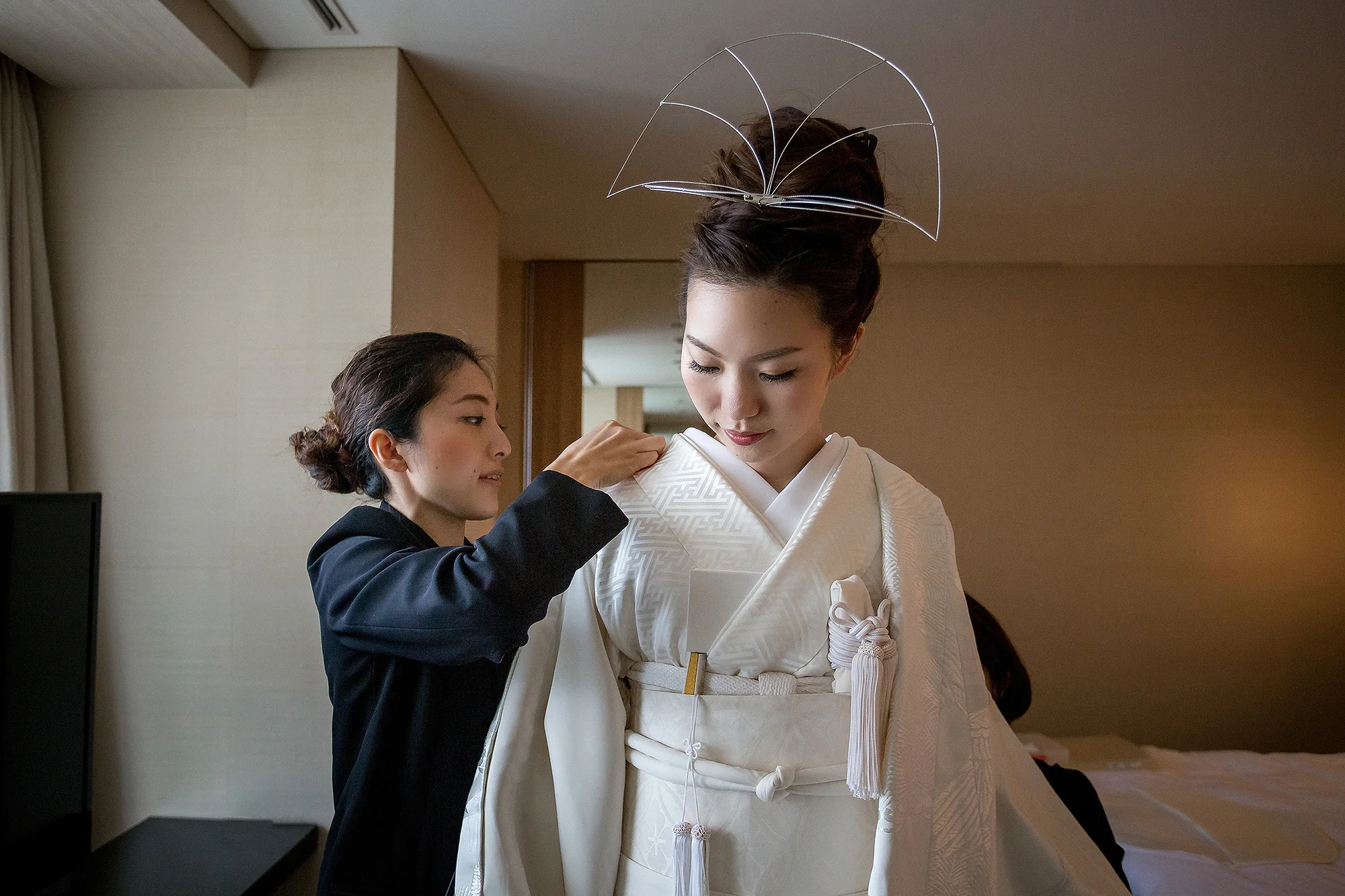
A kitsuke dresser fits the bride's white kimono, a fan of silver wire in her hair.
Park Hyatt, Tokyo
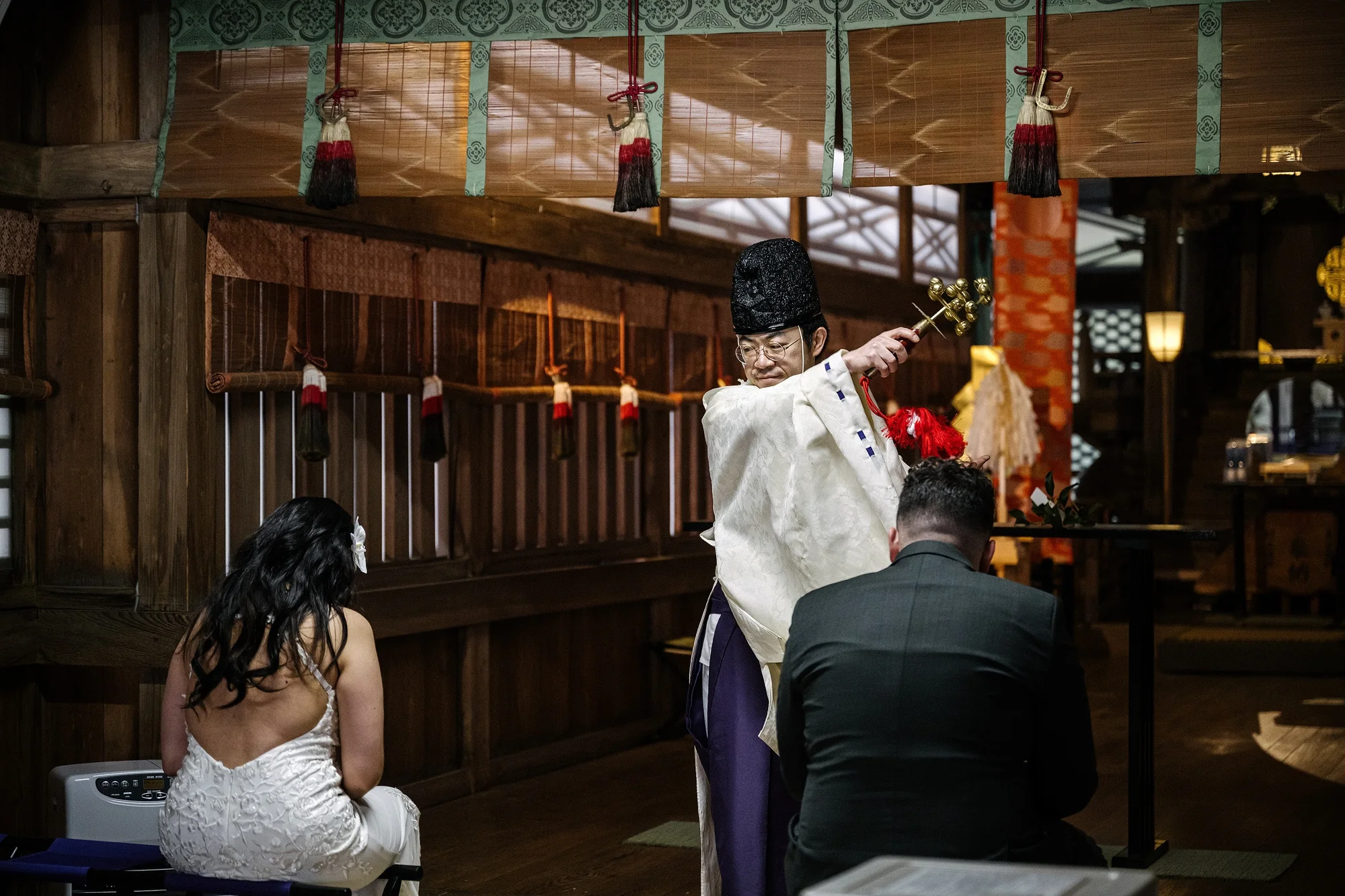
A priest waves the purification wand over the seated couple at a Sengen shrine near Mt Fuji, the bride in her wedding dress.
Mt Fuji
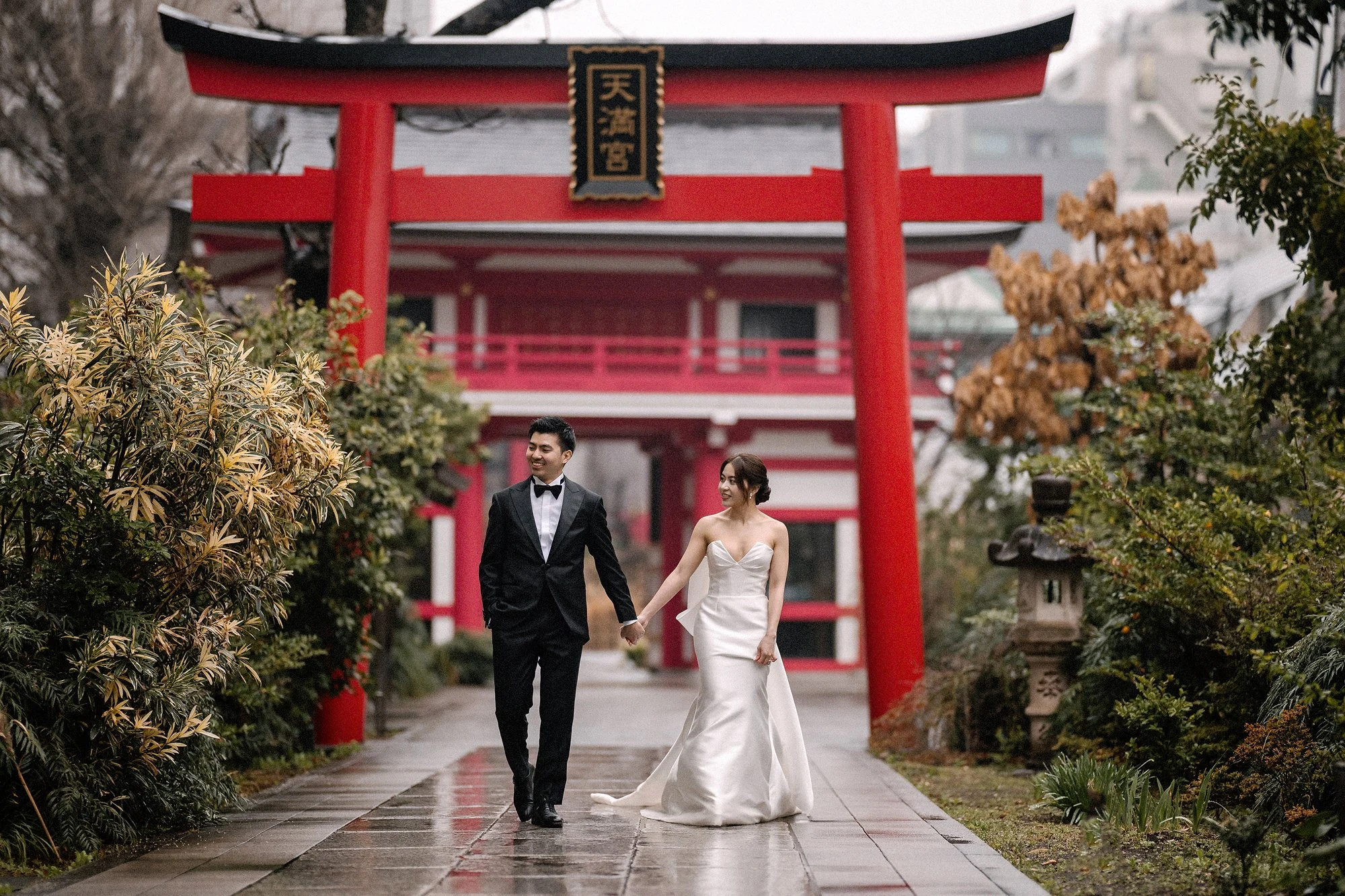
A couple walk beneath a red torii gate in Tokyo.
Tokyo
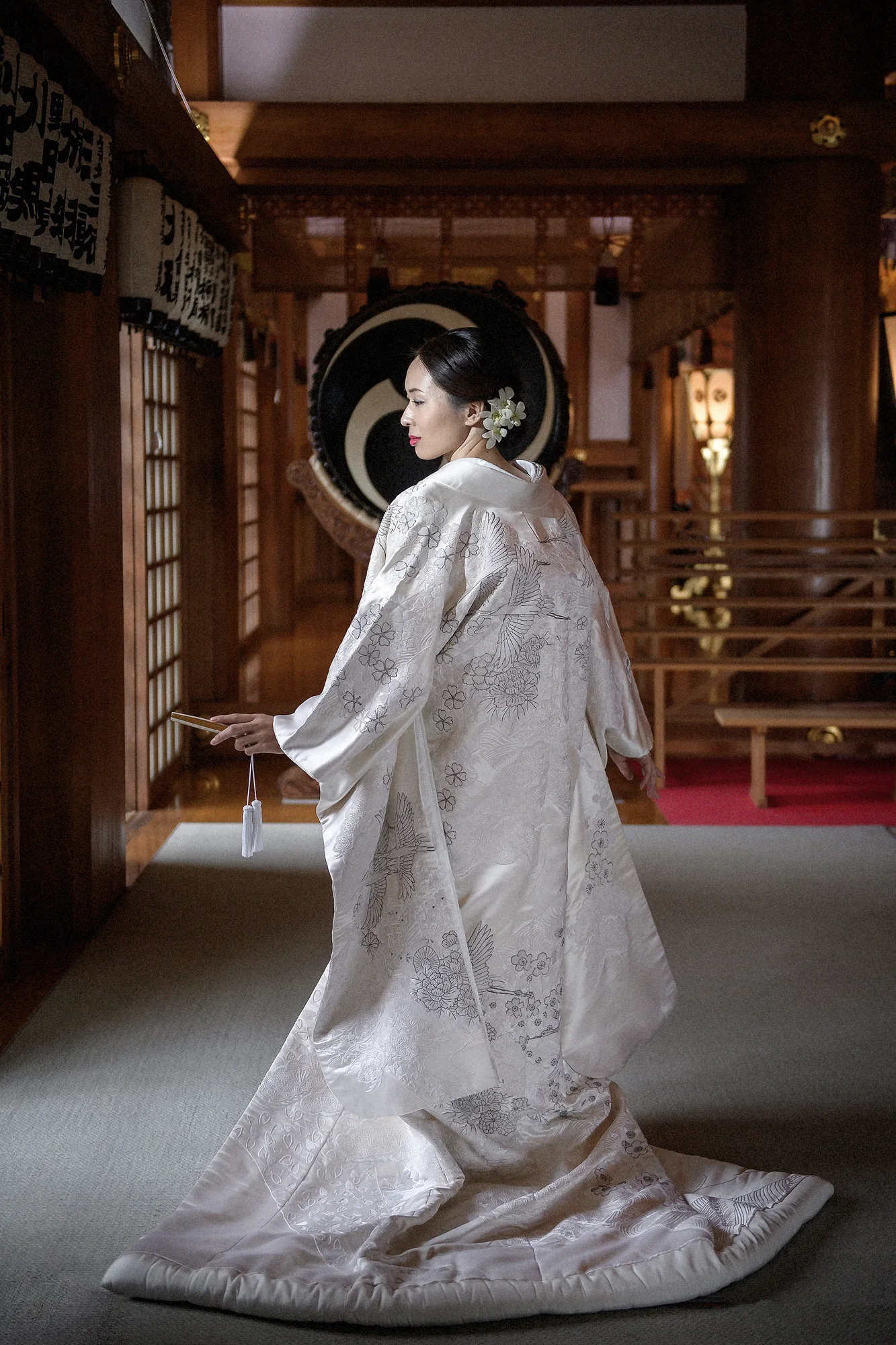
A bride in a white uchikake stands in a shrine hall beside a taiko drum.
Kanagawa
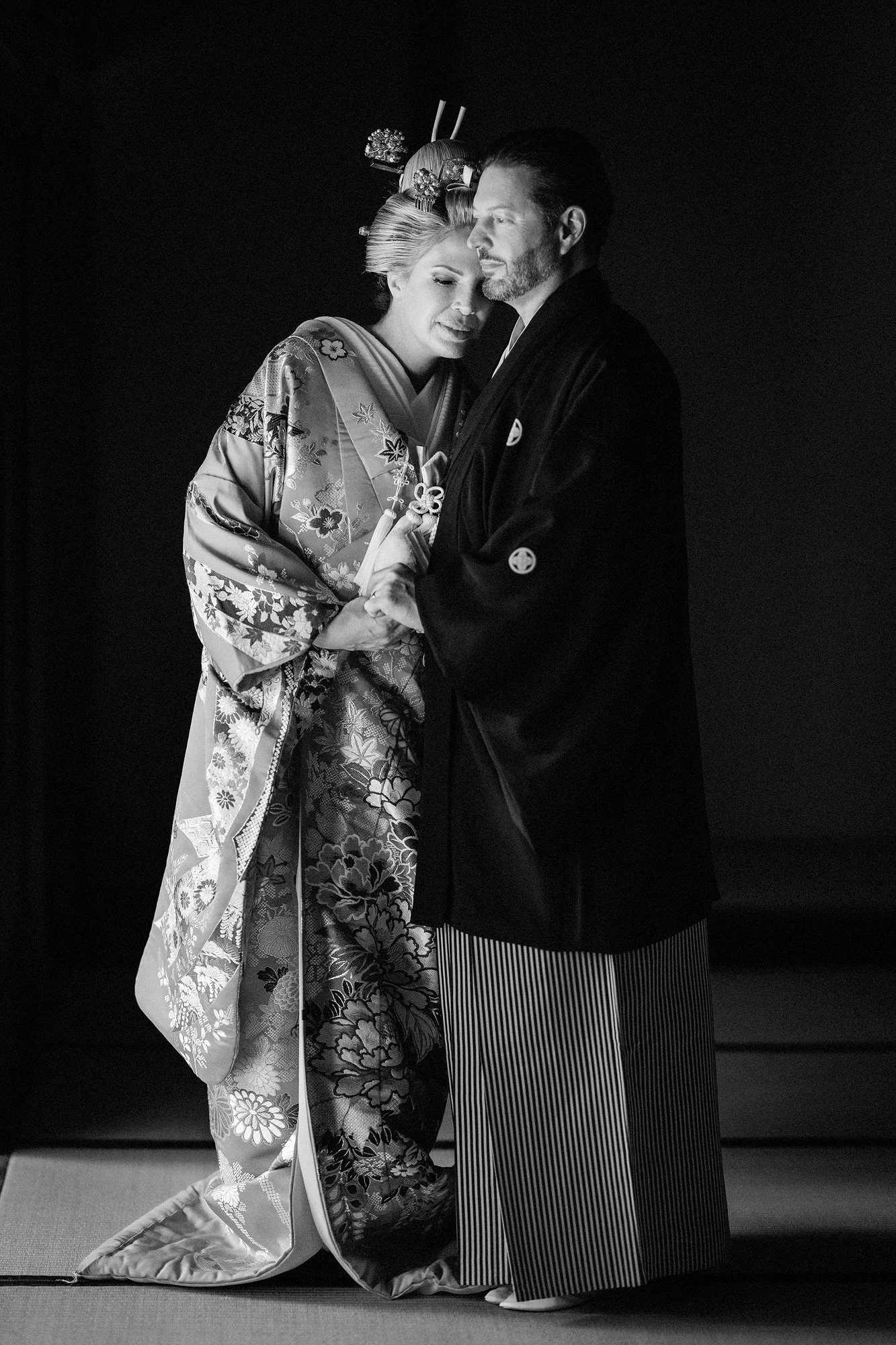
In black and white, a bride in nihongami and an embroidered uchikake stands with the groom.
Tokyo
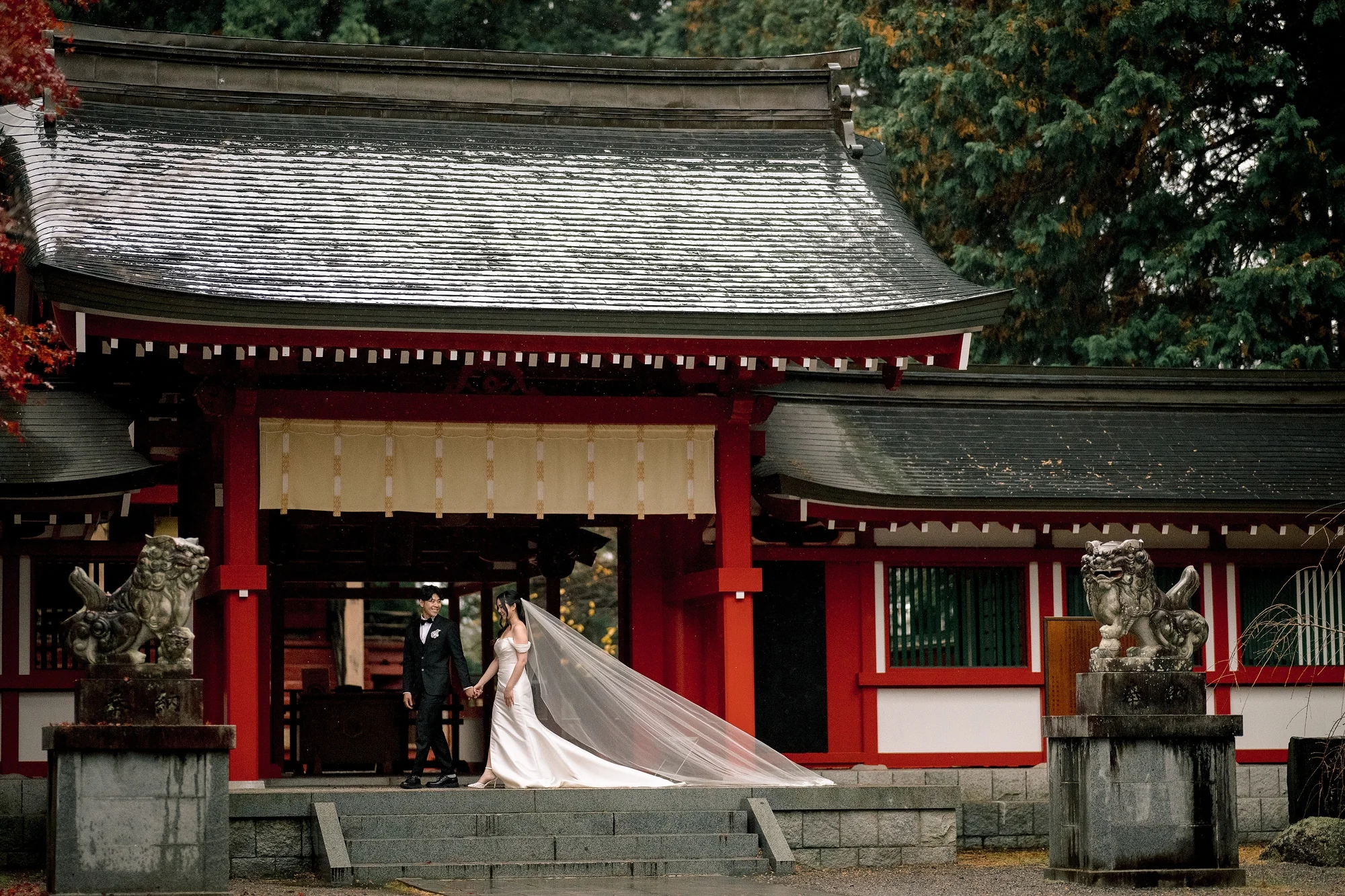
The couple walk out through the vermilion gate of Fuji Omuro Sengen Jinja, her long veil trailing on the wet stone.
Fuji Omuro Sengen Jinja
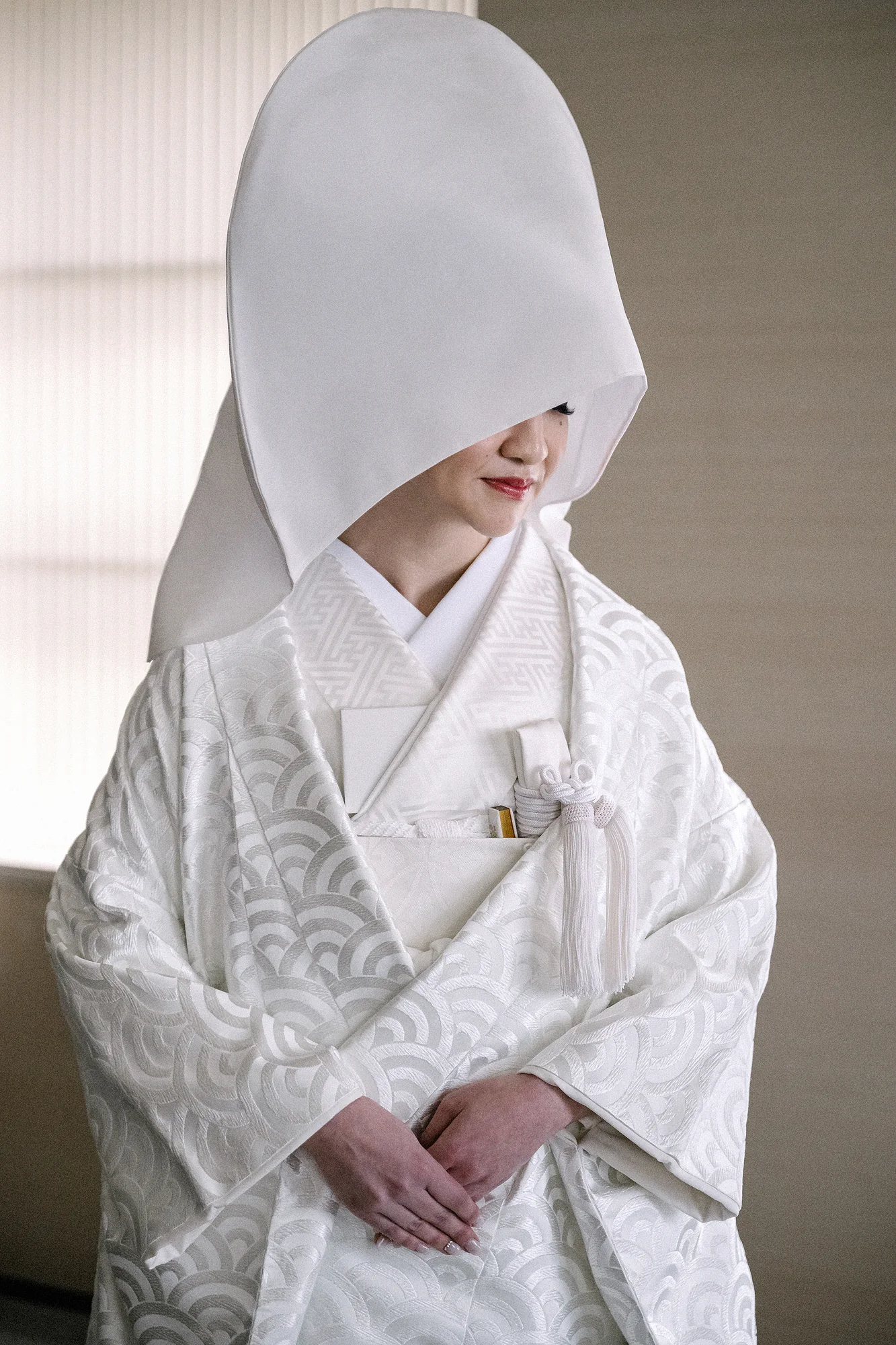
The bride sits in a white wataboshi hood and shiromuku, hands folded, in soft window light.
Park Hyatt, Tokyo
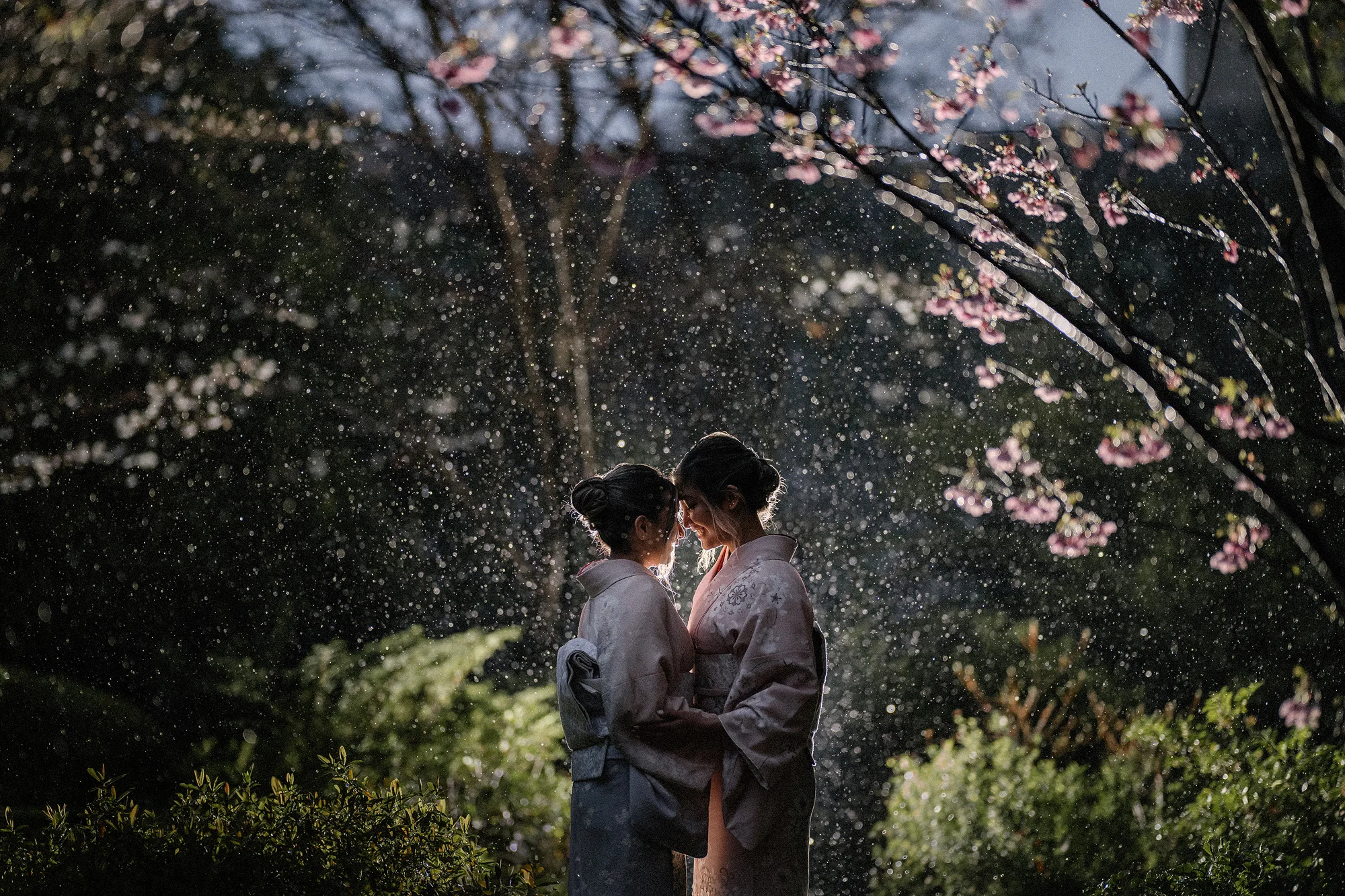
Two brides in kimono face each other beneath cherry blossom at dusk.
Jinya
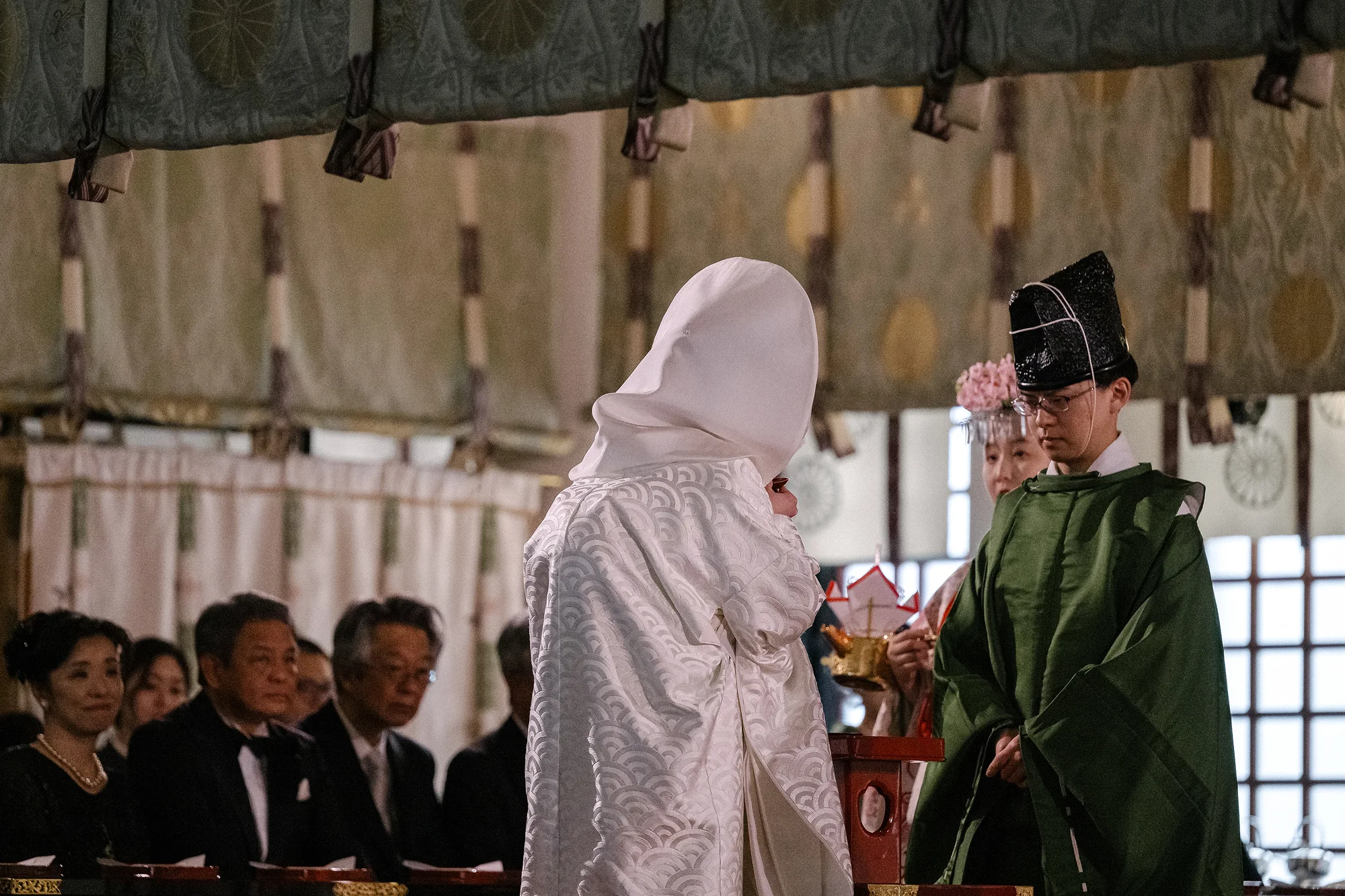
During a Shinto ceremony the bride in a white wataboshi sips sake beside a priest in green robes, family seated behind.
Tokyo
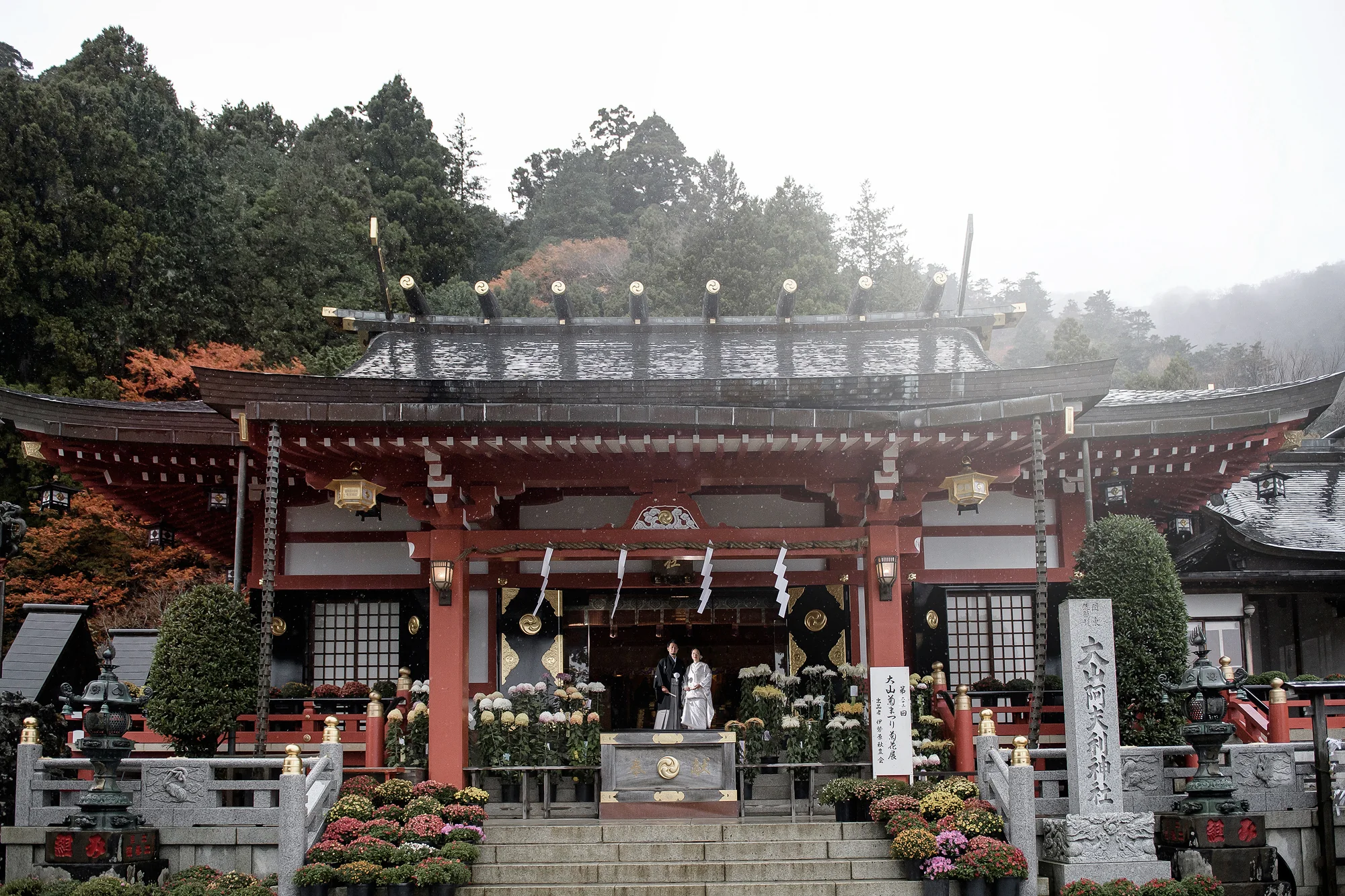
A couple before the red hall of Oyama Afuri Shrine in autumn.
Kanagawa
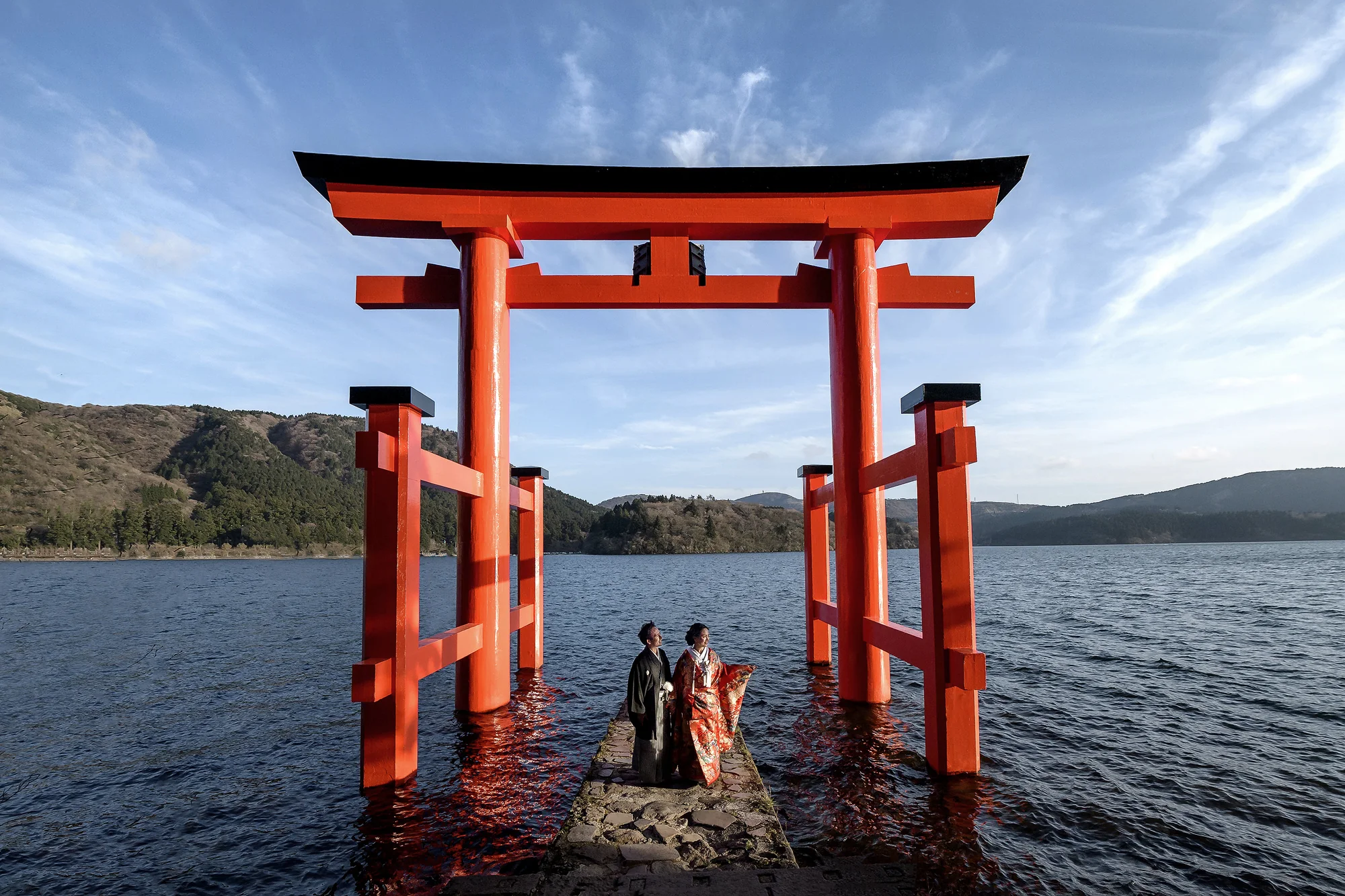
A couple in kimono stand on the stone steps of a vermilion torii rising from Lake Ashi in Hakone.
Hakone
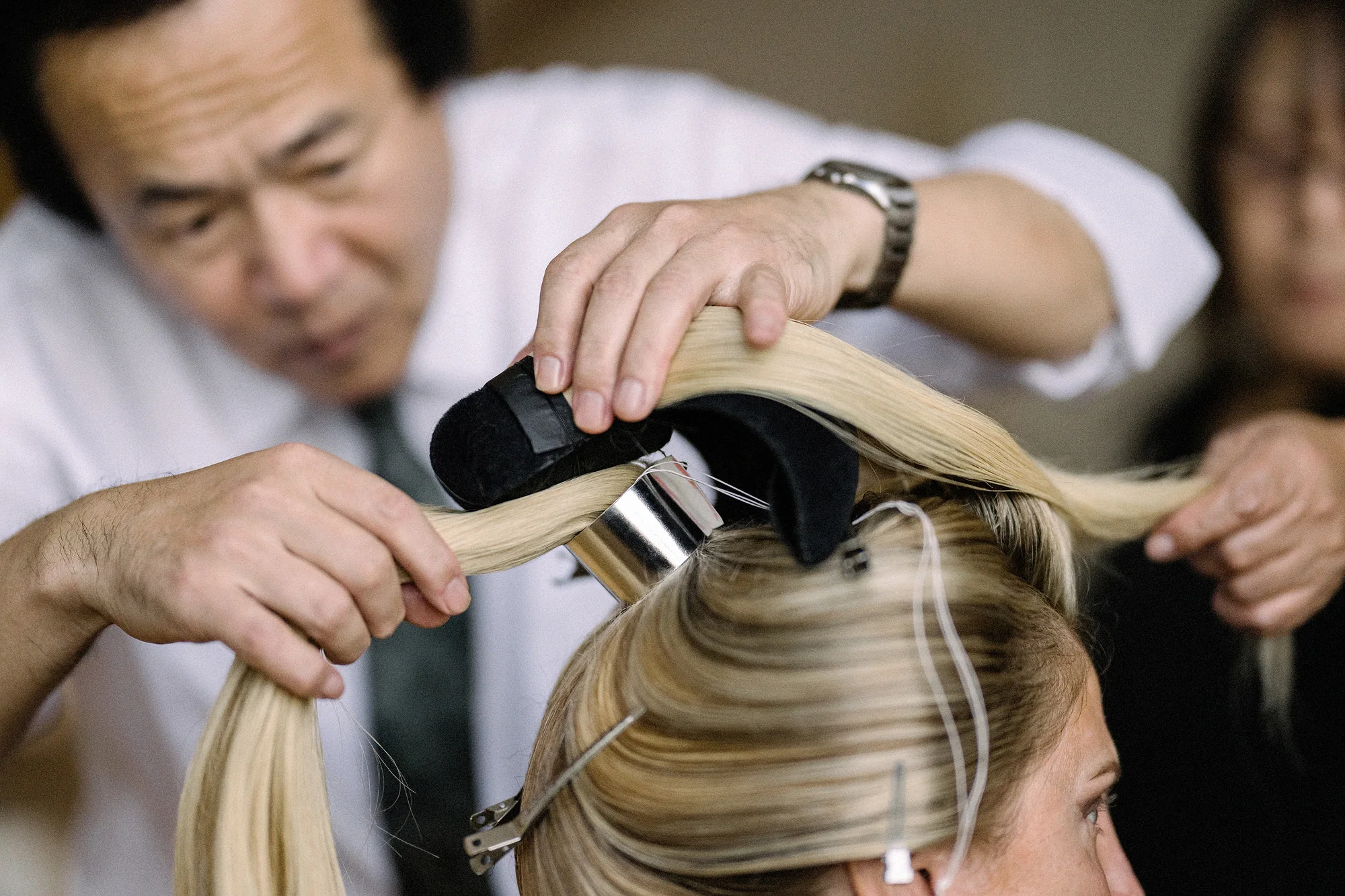
A nihongami master shapes the bride's own hair into a traditional style on the wedding morning.
Aman, Tokyo
From above, hundreds of vermilion torii curve through a spring garden and over a pond at Takayama Inari Shrine in Aomori, the couple small on a red bridge.
Takayama Inari, Aomori
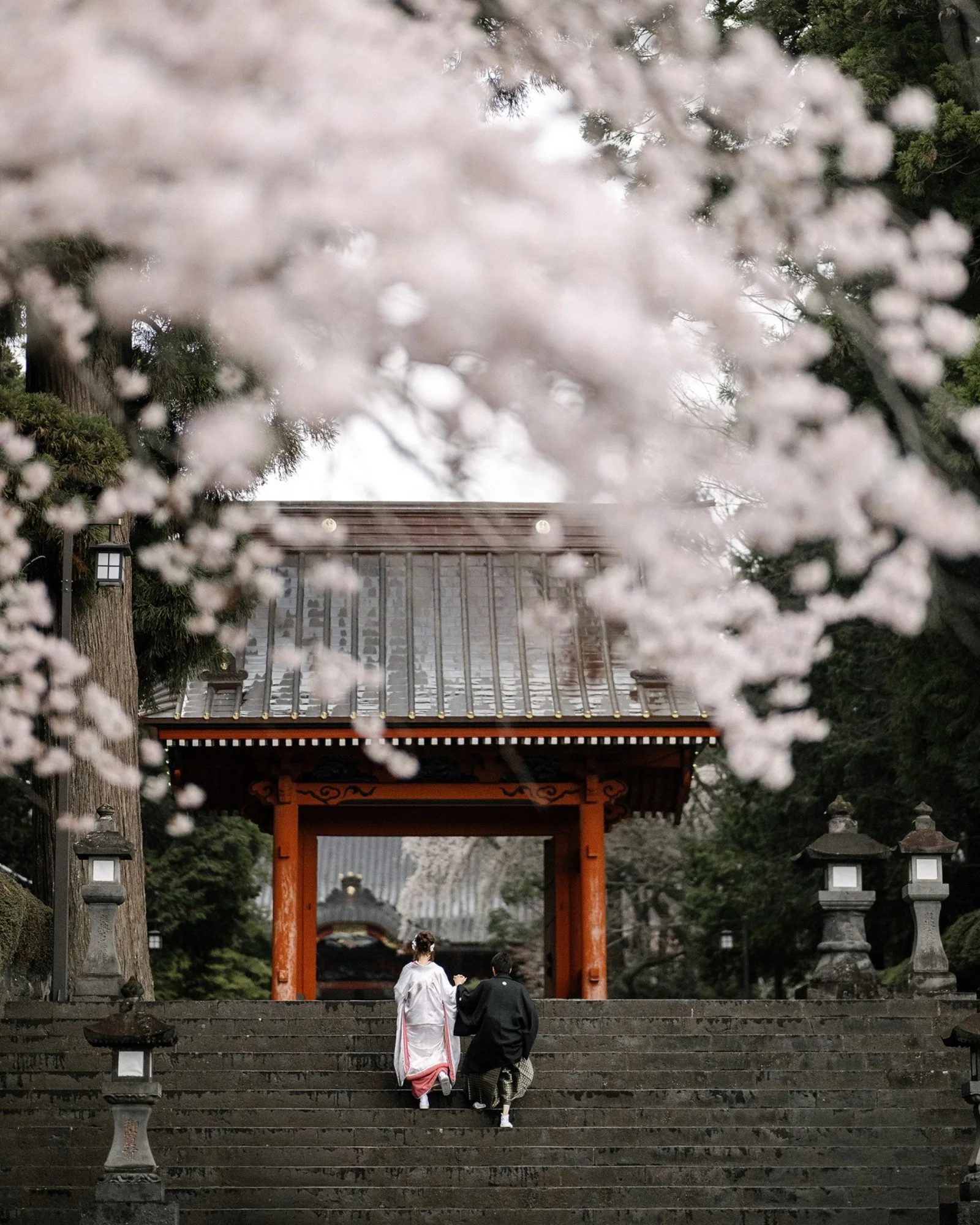
A bride and groom walk in procession at a Buddhist temple gate under cherry blossom.

Useful distinctions

Can international couples take part? It can be possible, depending on the institution. We explore the options and confirm the requirements for your ceremony, rather than assuming that another couple’s arrangements will also apply to you.

Will there be language support? We plan with you in English and discuss the ceremony language and available explanations directly with the institution.

What about legal registration? A ceremony and civil marriage registration are separate arrangements. If registration is part of your plans, the requirements and recognition need to be checked with the relevant authorities for your circumstances.

Tell us what draws you toward the ceremony and what you hope it will mean within your day. We’ll explore it with you from there.

Tell us about your ceremony